

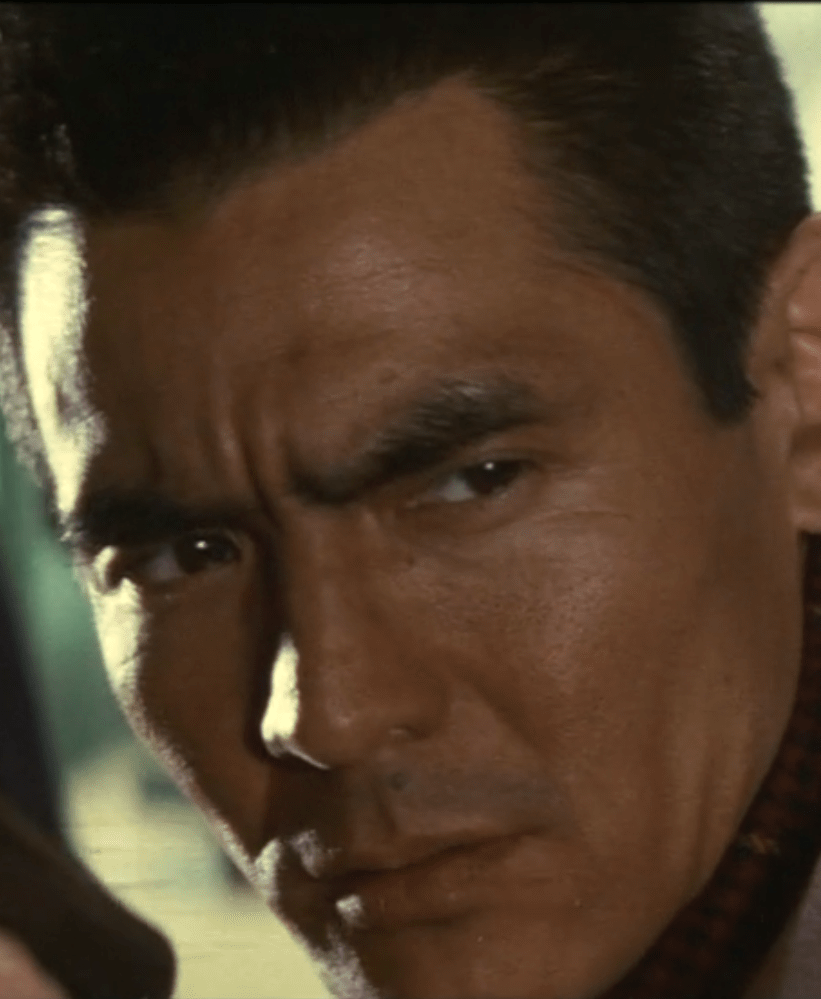
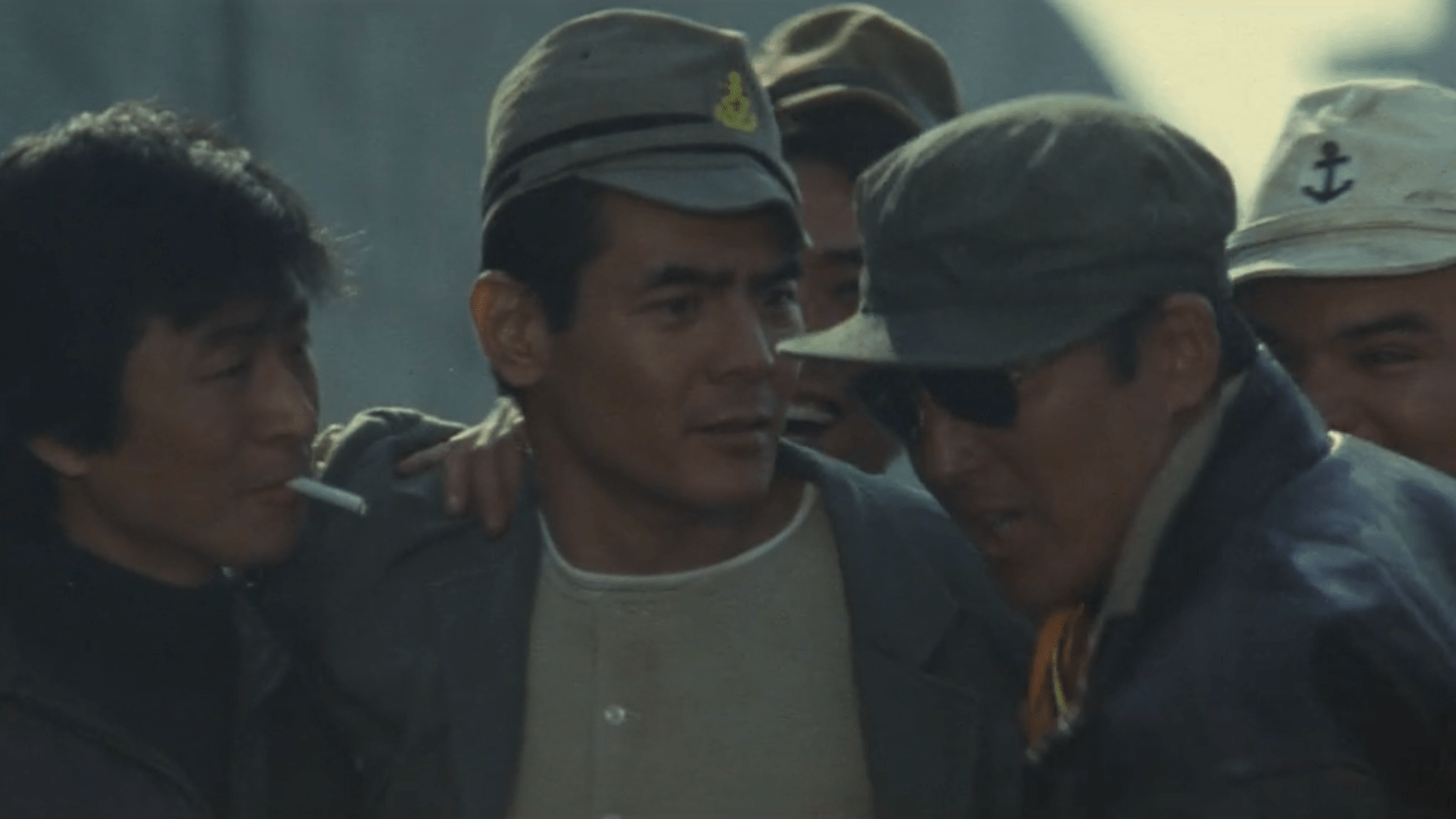

A new kind of violence replaced the old in lawless Japan. It was every man for himself amidst the chaos.
- Original Title: 仁義なき戦い
- Directed by: Fukasaku Kinji
- Featuring: Sugawara Bunta, Kaneko Nobuo, Umemiya Tatsuo, Tanaka Kunie, Ibuki Gorō, Kawachi Tamio & more
- Studio: Toei
- Extras: Plot Deep Dive | Introduction to Battles Without Honor and Humanity
REVIEW
Synopsis
Set between 1946 and 1956 and based on real-life yakuza memoirs, Battles Without Honor and Humanity charts the formative years of Hirono Shōzō and the Yamamori family, one backstab at a time. Set in a violent and chaotic world, with a matching directing style, a dazzling all-star ensemble cast, and a hefty dose of humour, this masterpiece of the yakuza genre is a deceptively subtle tale of survival and human drama.
Rags to Riches, Yakuza-Style
1946 Hiroshima bears all the scars of a recent war: destruction, ruins, abject poverty – a fertile ground for casual violence and lawlessness. Young men in worn-out army clothing struggling to eat and find work, young women using their bodies to survive, families that lost everything, famished or dead animals lining the streets: in this world, everyone suffers. As one character points out, you are not born a yakuza, you become one – and for our barely surviving characters, desensitised by years of war and with zero prospects or food on the table, the lure of the yakuza world is impossible to resist. But, as they soon find out, survival is not guaranteed.
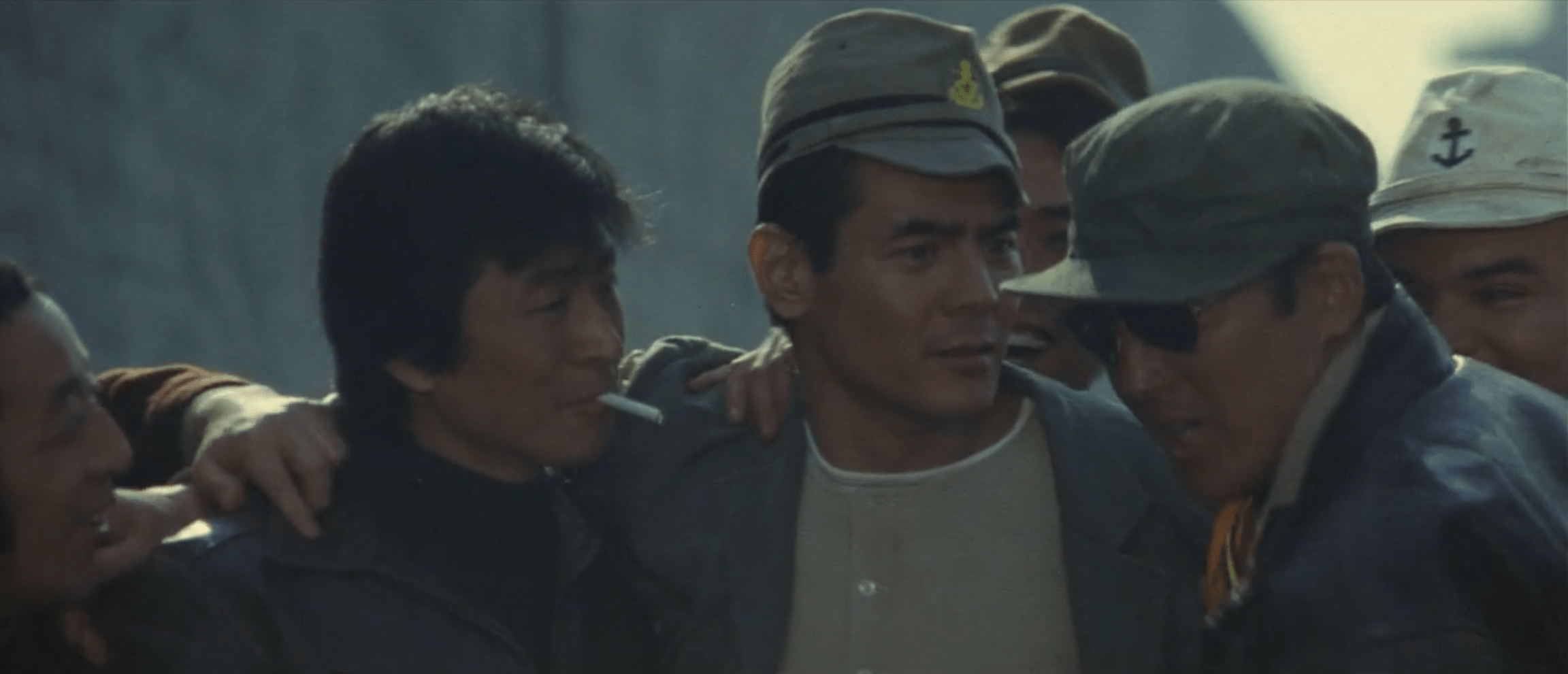
While Battles follows an ensemble cast of colourful yakuza, our main guide through this journey is Hirono Shōzō, who joins the yakuza world after avenging a friend and, as the yakuza saying goes, “becomes a man”. Buckling expectations, Hirono (who can be found in a bar listening to love songs on repeat) immediately shows an honorable streak, rushing to help an assaulted woman and risking his life and freedom to avenge a friend without batting an eyelid. Like attracts like, and soon Hirono, now a Yamamori member, forges a strong bond with fellow idealist Wakasugi, a flamboyant member of soon-to-be rival family Doi. Falling prey to machinations bigger than them, the families fight and Yamamori eventually prevails – but the Yamamori family is about to enter its most destructive phase yet, with brothers turning against brothers in a fight that will spare very few of the starting characters, and will leave Hirono thoroughly disillusioned with the yakuza world.
True Crime, False Chivalry
Based on the memoirs of real-life yakuza Kōzō Minō, and with plenty of yakuza to advise the cast and crew, Battles Without Honor and Humanity popularised the new yakuza film sub-genre ‘jitsutoku’ (true account), focusing on a more factual and less romantic portrayal of the yakuza than the more traditional ‘ninkyo’ (chivalrous) sub-genre, which was losing in popularity by the early 1970s. Battles makes this shift almost comically clear in the film’s very first murder (the gun killing the sword), but the theme is expressed in more subtle ways throughout the episode and series. Characters often reference the yakuza code – but only as a tool to exploit or neutralise characters or, as Yamamori does so well, to give self-aggrandising speeches about honor and chivalry while doing the exact opposite in the background. Chivalry is a joke and an empty posturing tool, and while nobody is good in the morally grey world of Battles, the characters who exhibit the most chivalrous traits are consistently harmed by it.

Nobody suffers more from this than Hirono. Always standing up for what he feels is right (in the yakuza world, mind you), always volunteering to take the fall, always honouring brotherhoods and commitments: Hirono is the embodiment of the romanticised code crashing against the actual yakuza world. In this world, it is every man for himself, and Hirono’s good will is mined and used against him time and time again. His wide-eyed naivety in the early scenes soon gives way to a more thoughtful and reluctant Hirono, before his anger and resentment at the hypocrisy of the yakuza world truly take over. Much of the film is about Hirono’s journey of disillusionment – but also about the making of a man who learns to stay true to himself no matter what, and who will command respect all over the yakuza world like no other.
The Artistry of the Cast & Crew
[From: Introduction to Battles Without Honor and Humanity (1973-74)]
On first watch, Battles Without Honor and Humanity’s visuals can be disconcerting. Characters are introduced (and killed) at a dizzying pace, with character information relayed through screen overlays that are often the viewer’s only chance to register it. A few voice-overs explain key context and events, but the rest is firmly up to the viewer to remember and analyse. However, this impression of general chaos (which can absolutely be enjoyed as is, ideally with a strong bottle of sake) hides very methodical and precise beat-by-beat storytelling with neatly organised thematic chapters, detailed and consistent webs of relationships, and never a wasted scene or character. The more you piece together, the more astonishing the orchestration of events is – so much, into such a relatively short (99 minute) runtime.

The attention to detail carries into the filming methods. The famous Fukasaku “shaky camera” used in action scenes highlights the messiness of killing done by men who are professionals only by name: missed opportunities, lethal pausing, endless bullets missing the mark or hitting the wrong target, panicked yelling and rolling on the floor – professional hitmen they are not. But the camera also shines in the quiet moments. As is fitting of an ensemble cast film, characters are rarely alone in the frame, and even then are not always in clear view with props or other characters in the way. Using eye or shoulder-level shots, Fukasaku puts us in the room with the characters – and this proximity is not innocent. An incredible amount of detail is gleaned from watching all the characters: the subtle glances exchanged in the background, the expressions washing over a character’s face, the strange activities and actions they do away from the center of the screen. Battles Without Honor and Humanity is a show-not-tell film that seems to endlessly reward pausing and rewatches.
This subtlety would not be possible without the incredible skill of the cast, often in career-defining roles that seem tailor-made for them and their personality. The subtlety and intensity of the acting often gives the viewer pause – Sugawara’s simmering anger, Kaneko’s theatrics, Umemiya’s boldness, Matsukata’s assertiveness, the (Piranha Army) extras’ vivaciousness – all brought to the forefront by Fukasaku’s directing talent.
In Conclusion
Through this ten year journey, Battles Without Honor and Humanity takes us on a complex tale of human drama, and introduces us to the pitfalls of the yakuza world – as close to reality as can be portrayed. Structured around an exact and methodical course of events – with plenty to observe and analyse, a director making all the right decisions, and stars at the peak of their artistry, Battles Without Honor and Humanity earns its place in the pantheon of yakuza films – and of great cinema in general. Watch it, and then watch it again!
BEST OF

FINGER FOOD
Hirono cuts off and then promptly loses his freshly cut finger, much to his dismay. It’s eventually found, all pecked-up by the garden hens. Ouch!
MY TUMMY HURTS
Confronted with the possibility of actual combat, the Yamamori members immediately find excuses to avoid duty. From “my tummy hurts” to just looking away sheepishly, the gold medal goes to Makihara for fake-crying about his wife being pregnant, and being excused immediately. Well played!

EVERY LITTLE HELPS
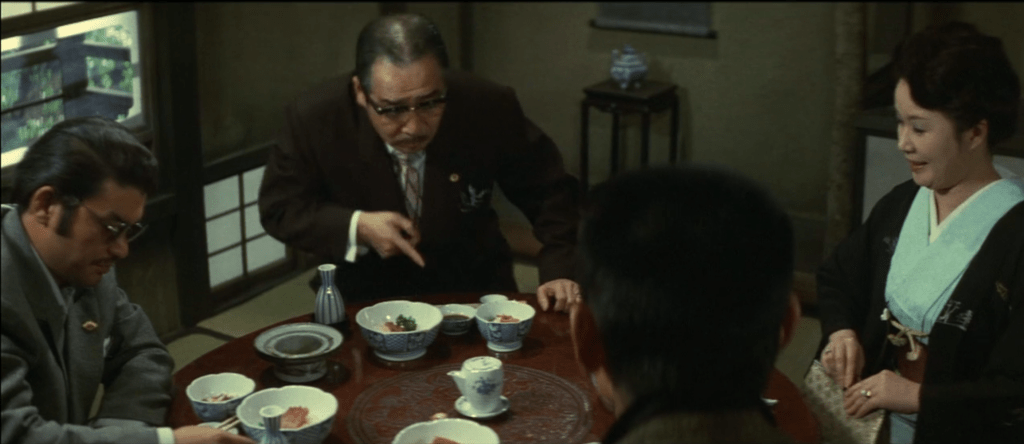
To celebrate his release from prison, Yamamori treats Hirono to a lavish meal… which Hirono has to pay for himself, including Yamamori’s share. Stay classy!
TRUE BROTHERS
Against all odds, and despite numerous orders to do so, Hirono and Sakai refuse to kill each other till the end, reluctant to sully the special bond they once shared. Brothers, no matter what.
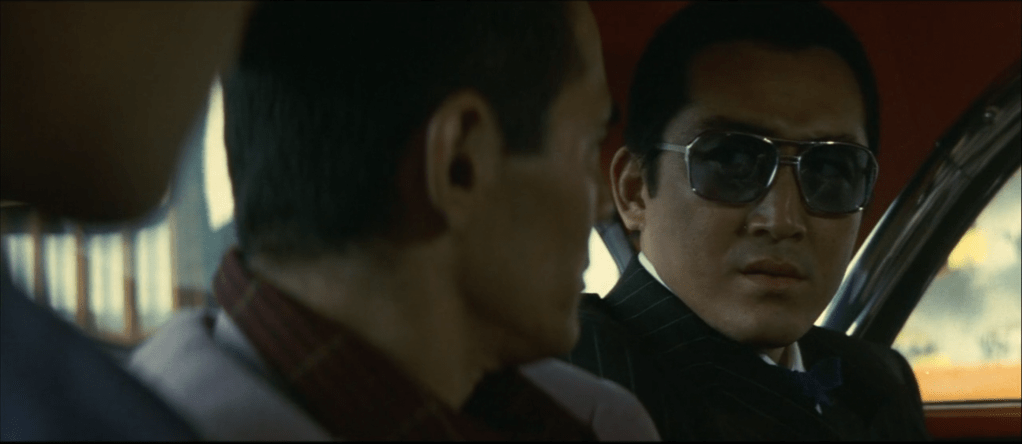

DON’T MESS WITH HIRONO
Challenged by Yamamori after angrily crashing a funeral, Hirono, gun in hand, silences him: “Yamamori-san… I still have bullets left.”.
Discover more from Gamblers & Drifters
Subscribe to get the latest posts sent to your email.
 Gamblers & Drifters
2 thoughts on “Review: Battles Without Honor and Humanity [1] (1973)”