
New to yakuza films and unsure where to start? Looking for something a little different from the ones you usually watch? Here are five classics to dive into this rich genre – and a note on modern yakuza films.
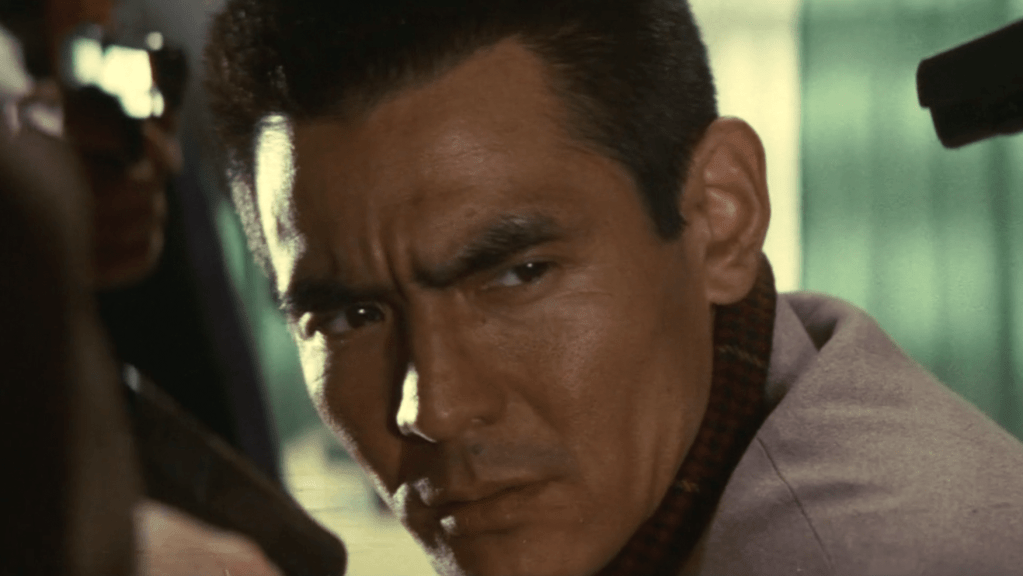
- BATTLES WITHOUT HONOR AND HUMANITY [1] (1973)
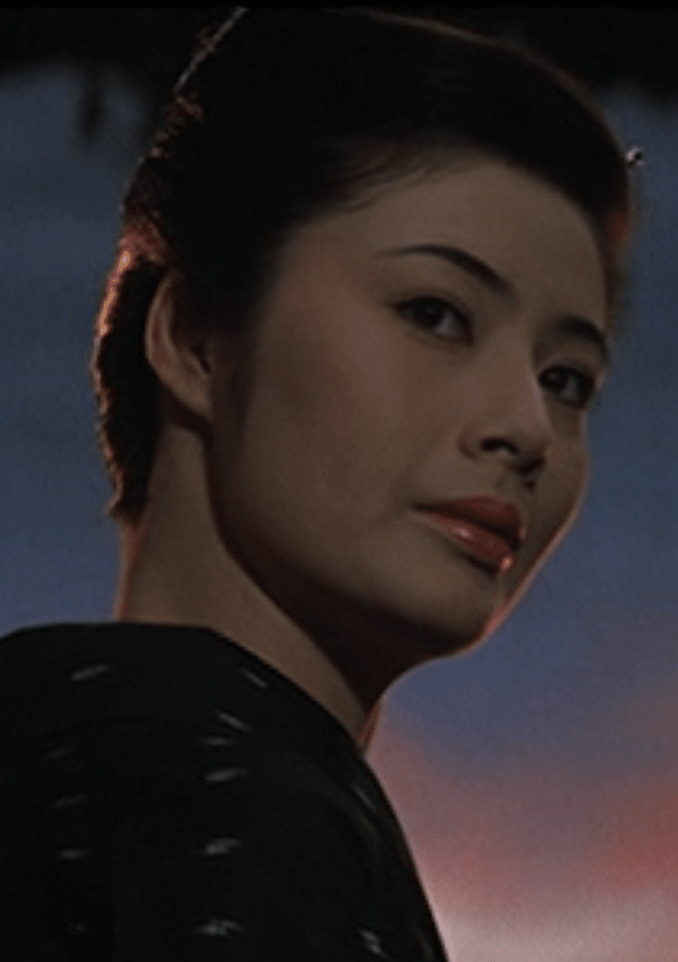
- RED PEONY GAMBLER (1968)
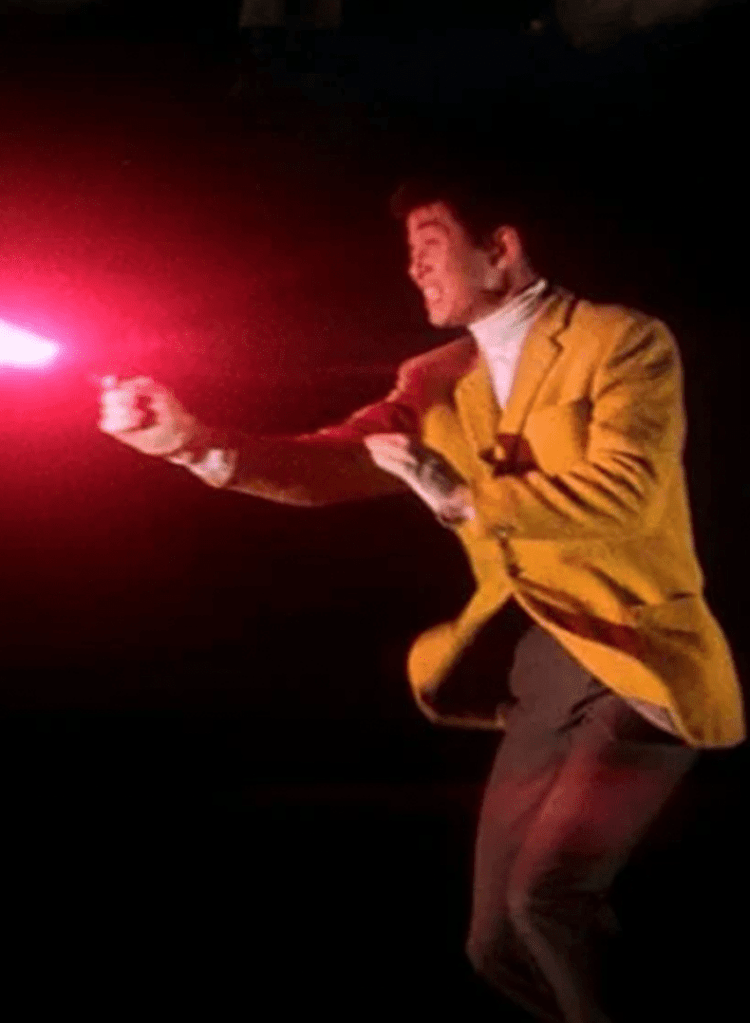
- TOKYO DRIFTER (1966)
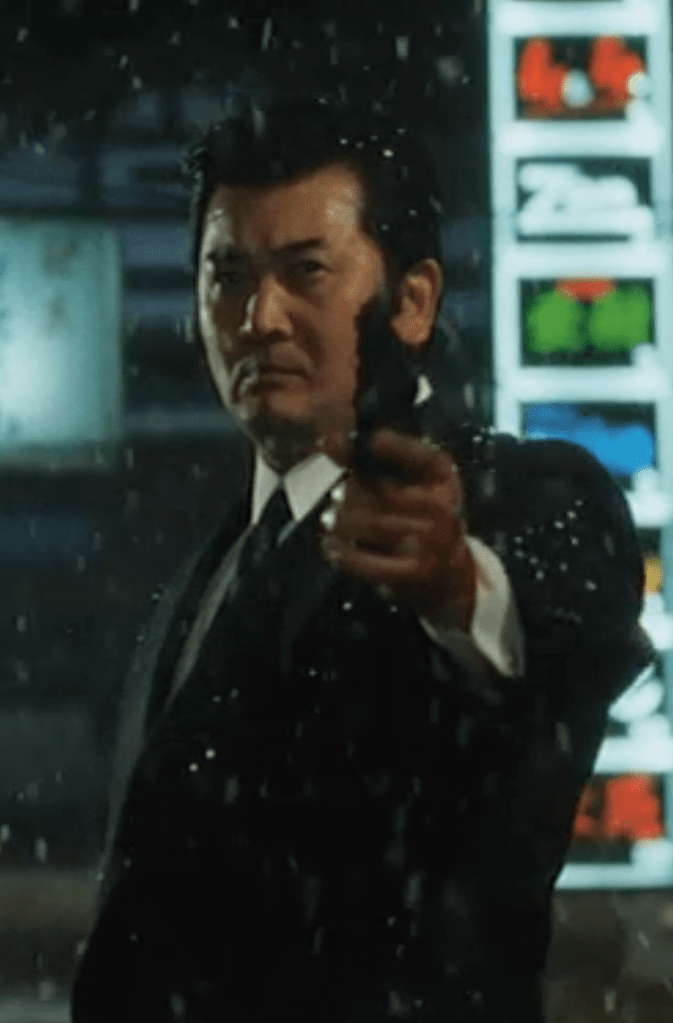
- LEGEND OF TURMOIL (1992)
- DRUNKEN ANGEL (1948)
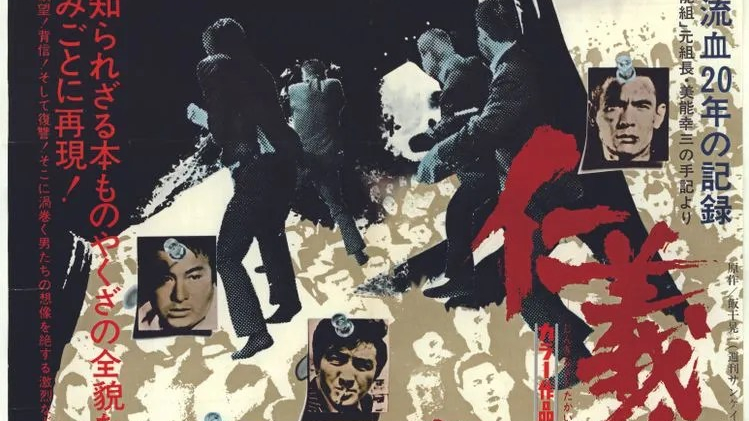
BATTLES WITHOUT HONOR AND HUMANITY [1] (1973)
– THE COMPLEX ‘TRUE ACCOUNT’ CLASSIC –
A new kind of violence replaced the old in lawless Japan. It was every man for himself amidst the chaos.
- Original Title: 仁義なき戦い
- Directed by: Fukasaku Kinji
- Featuring: Sugawara Bunta, Kaneko Nobuo, Umemiya Tatsuo, Tanaka Kunie, Ibuki Gorō, Kawachi Tamio & more
- Studio: Toei
- Extras: Plot Deep Dive | Introduction to Battles Without Honor and Humanity
Film one of a five-part yakuza epic, Battles Without Honor and Humanity [1] (1973) charts the ten formative years of the Yamamori family and its key member Hirono Shōzō in post-war Hiroshima. Featuring a colourful all-star ensemble cast coming and going at breakneck speed, leaning on director Fukasaku’s shaky action camera and guerilla filming to show endless waves of pointless violence, and peppered with unexpected theatrics and dark humour, the explosive Battles found its success both at the box office and as an enduring classic.

The film also marked the consecration of the new yakuza film sub-genre ‘jitsuroku’ (true account), documentary-style cinema that rejected the chivalrous yakuza portrayals of yore and opted to show all the violence and self-serving pettiness of that world. Based on the journals of real-life yakuza Minō Kōzō, with plenty of yakuza in the crew and on set, Battles is as close to reality as is comfortable. It can be enjoyed either by embracing the chaos, or by untangling all the subtle plot threads one by one (check out the Plot Deep Dive to get started).
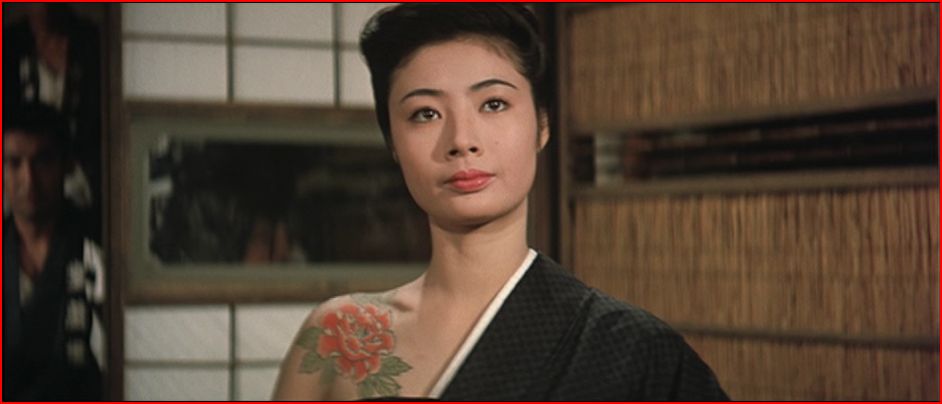
RED PEONY GAMBLER (1968)
– THE TRADITIONAL ‘CHIVALROUS’ CLASSIC –
“I’m Yano Ryuko, second generation boss of the Yano family. I’ll take care of everything.“
- Original Title: 緋牡丹博徒
- Directed by: Yamashita Kōsaku
- Featuring: Fuji Junko, Takakura Ken, Wakayama Tomisaburo, Machida Kyōsuke & more
- Studio: Toei
On the other end of the spectrum is a classic of the ‘ninkyo’ (chivalrous) yakuza film sub-genre. Mostly set in late 19th / early 20th century Japan, built on the model of popular period dramas, and characterised by melancholic tales of kimono-clad and sword-wielding good (protagonists) versus bad (corrupt bosses), ninkyo portray the yakuza as reluctant heroes, always torn between duty and doing the right thing. Visually beautiful, moving, and comfortably familiar to repeat viewers, ninkyo captivated Japanese audiences throughout the 1960s. Red Peony Gambler (1968) is a celebrated ninkyo gem, as well as a useful introduction to yakuza tropes, customs, and gambling roots, depicted in detail throughout the film.
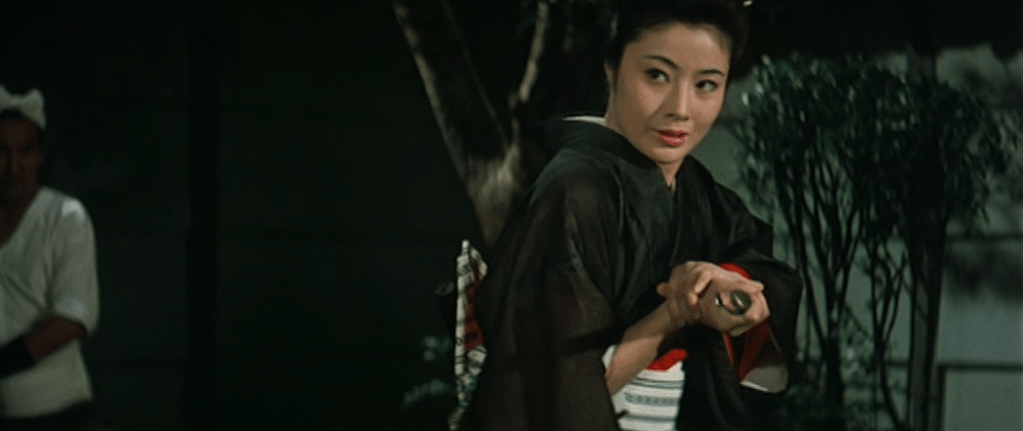
But this ninkyo comes with a twist: a woman protagonist, played by popular genre actress Fuji Junko. After the brutal murder of her yakuza father, the young Yano Ryuko takes over the family and travels Japan as Oryu the Red Peony Gambler to find the culprit. Constantly derided and underestimated but never losing her composure, Oryu is a fascinating exploration of being a woman in a man’s world, and of the price to pay for keeping your ideals burning bright against all odds. Featuring both humourous and truly poignant moments, delivered by another all-star cast, it’s an absolute delight to watch Oryu outsmart and annihilate anyone who stands in her way.

TOKYO DRIFTER (1966)
– THE STYLISH ‘BORDERLESS ACTION’ CLASSIC –
“Money and power rule now. Honour means nothing!”
- Original Title: 東京流れ者
- Directed by: Suzuki Seijun
- Featuring: Watari Tetsuya, Nitani Hideaki, Matsubara Chieko, Kawachi Tamio, Gō Eiji & more
- Studio: Nikkatsu
In between Toei’s classic ninkyo and chaotic jitsuroku, another studio decided to create their very own brand of 1950s/1960s cool: Nikkatsu and their ‘borderless action’ genre. Taking cues from the occidental Film Noir and Crime genres (with some fun excursions into Eurospy, and even their own take on ninkyo and jitsuroku), Nikkatsu gradually built the borderless action genre from cheap and cheerful youth cinema (featuring their ‘Diamond Guys’ line-up of popular actor/singers) to moodier entries featuring bold cinematography, jazzy scores, and intense (sometimes unhinged) storytelling – before self-imploding in the late 1960s.

A fascinating example of the genre is Tokyo Drifter (1966), directed by iconoclast director Suzuki Seijun (who would be fired the next year for creative insubordination) and featuring intense newcomer Watari Tetsuya. The film is an almost meta take on the typical yakuza story of boss/fatherly love, double-crossings, revenge, evil gangs, and impossible love. But where it truly shines is in its visuals: intense colour palette, bold cinematography, theatrical mise-en-scène – a feast for the eyes and a testament to the wild creativity of Suzuki & team, making Tokyo Drifter (1966) a flamboyant yakuza classic.
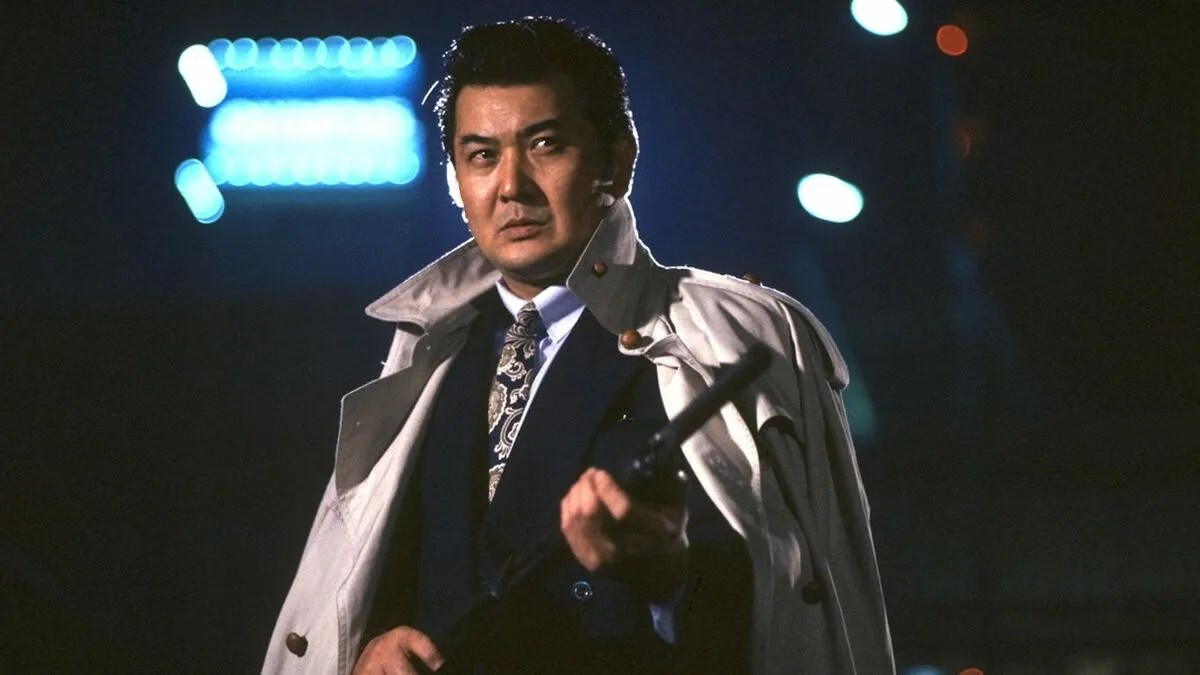
A LEGEND OF TURMOIL (1992)
– THE BACK-TO-BASICS MODERN CLASSIC –
“You look clean, but inside you’re much dirtier than a yakuza.”
- Original Title: 修羅の伝説
- Directed by: Izumi Seiji
- Featuring: Kobayashi Akira, Murota Hideo, Uchida Asao, Kitano Takeshi & more
- Studio: Toei
Yakuza films disappeared off the box office by the end of the 1970s, falling out of fashion and leading many of their iconic actors to turn to other ventures. The genre continued on in a much more subdued manner, losing much of its mass appeal and traditions in the process. But in 1992, perhaps bolstered by the incredible success of their Yakuza Ladies (16-film!) series, Toei decided to go back to basics by releasing a deeply traditional film, channeling a little bit of all the yakuza sub-genres of old through a (somewhat) modern lens.

Led by Nikkatsu/Toei megastar Kobayashi Akira (after a 13-year absence from the silver screen), and featuring appearances from stars both established and rising (Murota Hideo, Kitano Takeshi), A Legend of Turmoil (1992) is a quintessential yakuza story of fighting corruption from every angle. The film is notable for its well-orchestrated, impeccable pacing and its elegance, expressed through subtle acting and a tight story focus. From jitsuroku/borderless-like exciting action scenes to ninkyo-like katana showdowns in the snow and doomed chivalrous heroes, with the poignant melancholy of a world ending expressed to perfection by Kobayashi, A Legend of Turmoil (1992) is a love letter to all that is compelling in yakuza films, and a great introduction to the genre.

DRUNKEN ANGEL (1948)
– THE PRESCIENT POST-WAR CLASSIC –
“Yakuza will always do the wrong thing in the end. That’s why they’re so pointless. And so senseless.”
- Original Title: 酔いどれ天使
- Directed by: Kurosawa Akira
- Featuring: Shimura Takashi, Mifune Toshiro, Yamamoto Reizaburō
- Studio: Toho
Sometimes referred to as the first yakuza film, Drunken Angel (1948) depicts the unlikely friendship between the protagonist, an alcoholic doctor, and a fading yakuza. Importantly, the film shows us how post-war Japan saw the yakuza – with a surprisingly modern lens, radically differently from the chivalrous ninkyo genre that would follow. The yakuza as two-bob gangsters in flashy clothes, hated by all; leeches bleeding an ailing society dry; thugs commanding shaky obsequiousness and respect, taken away as soon as a sign of weakness is shown; victims of rivalry and pointless deaths to achieve shifting goal posts; and caught in the all-encompassing prison of the yakuza condition – characters unable to truly give in to the ruthlessness demanded of them, but also left with no way out other than death.

It’s fascinating to consider that Drunken Angel (1948) is contemporary to the events of Battles Without Honor and Humanity [1] (1973), set in 1946-1956. Without the 1970s glow smoothing out the details, and with Kurosawa’s (even more) acerbic eye on the corruption of post-war Japan and the emerging yakuza, things are grim – very grim. Pre-jisturoku, stray Kurosawa – whichever way is most appropriate to classify it, Drunken Angel is an unusual but enlightening classic with a place in the broader yakuza genre.
WHERE ARE ALL THE MODERN FILMS? 🤔
This website focuses on the golden age of the yakuza genre (sometimes defined as 1955 – 1980), with occasional exceptions for other films that have specific relevance to this era.
However, there is plenty to enjoy in modern yakuza films: V-Cinema, new directors and approaches… The most important is to find something enjoyable and then keep digging into the genre – there is no right or wrong way of approaching yakuza films!
For something distinctly modern, two great starting points are Kitano’s Sonatine (1993) and Miike’s First Love (2019).
Discover more from Gamblers & Drifters
Subscribe to get the latest posts sent to your email.
 Gamblers & Drifters