1962-1963: shaky alliances, betrayals, and expulsions – and the final sparks that ignite the Hiroshima War.
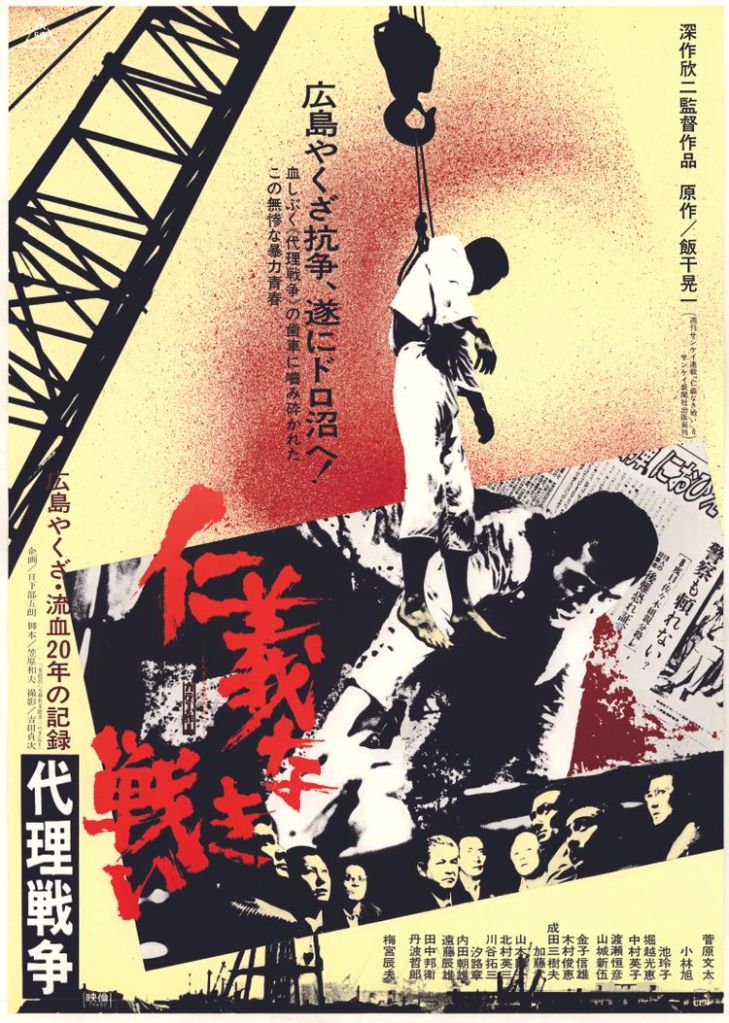
- Original Title: 仁義なき戦い 代理戦争
- Directed by: Fukasaku Kinji
- Featuring: Kaneko Nobuo, Kato Takeshi, Sugawara Bunta, Narita Mikio, Kobayashi Akira & more
- Studio: Toei
- Extras: Film Review Coming Soon | Part 1 | Introduction to the Series
MVPs
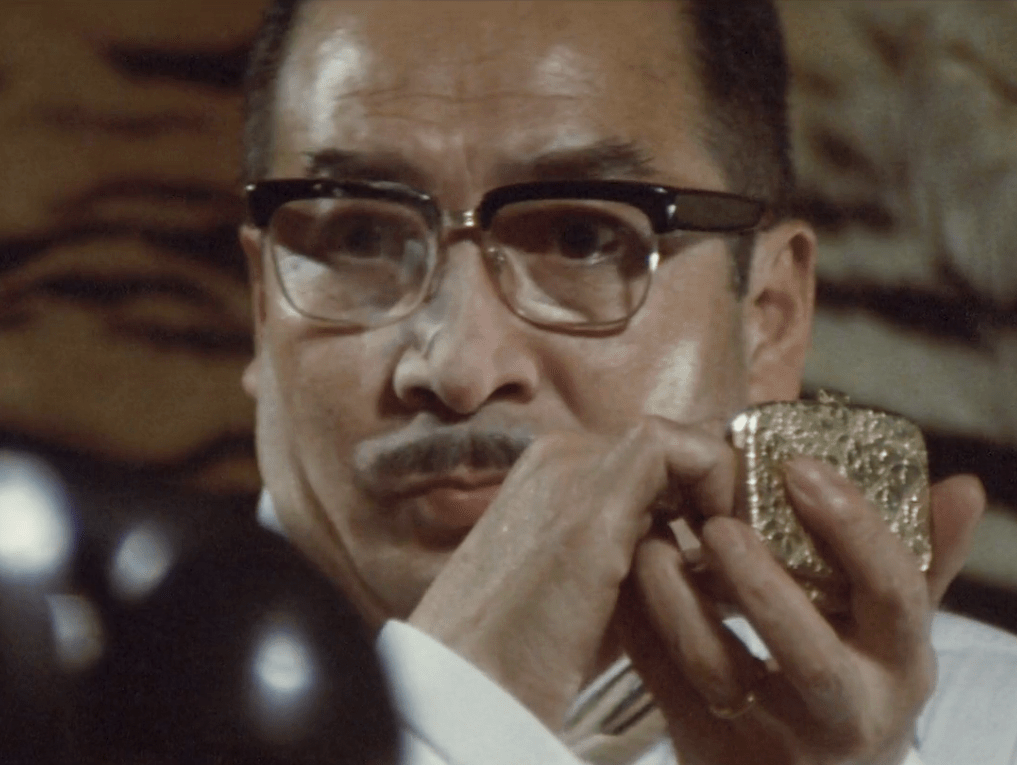
YAMAMORI Yoshio
(Kaneko Nobuo)
YAMAMORI Boss
- Alignment: immoral smart
- Likes: power crying, sending others to be humiliated, business friends
- Dislikes: being accountable for anything
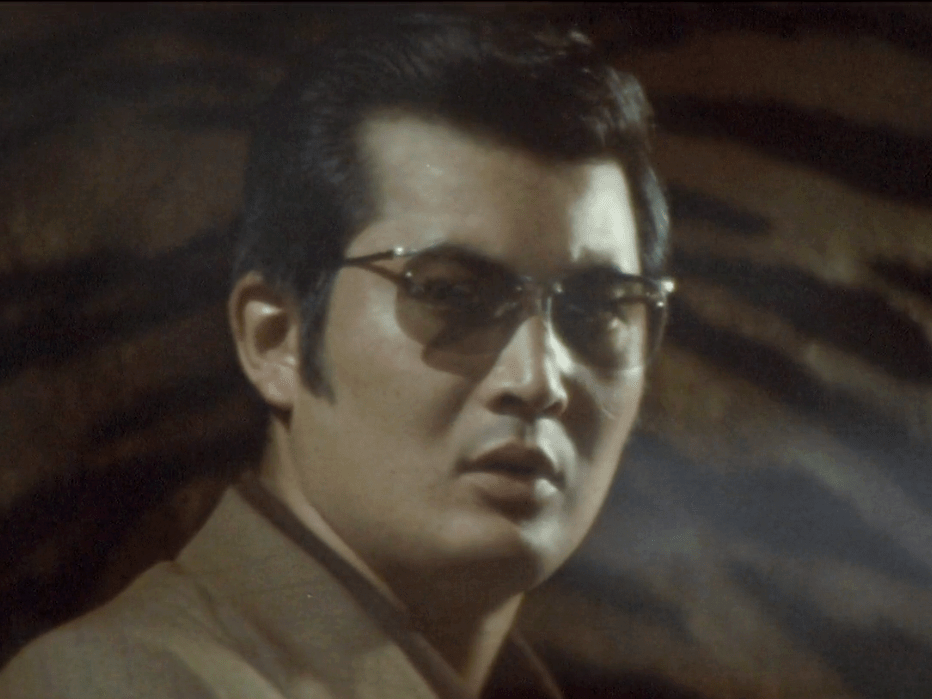
TAKEDA Akira
(Kobayashi Akira)
YAMAMORI Captain
- Alignment: neutral smart
- Likes: straightening families out, sunglasses, sparring with Hirono
- Dislikes: bad meetings
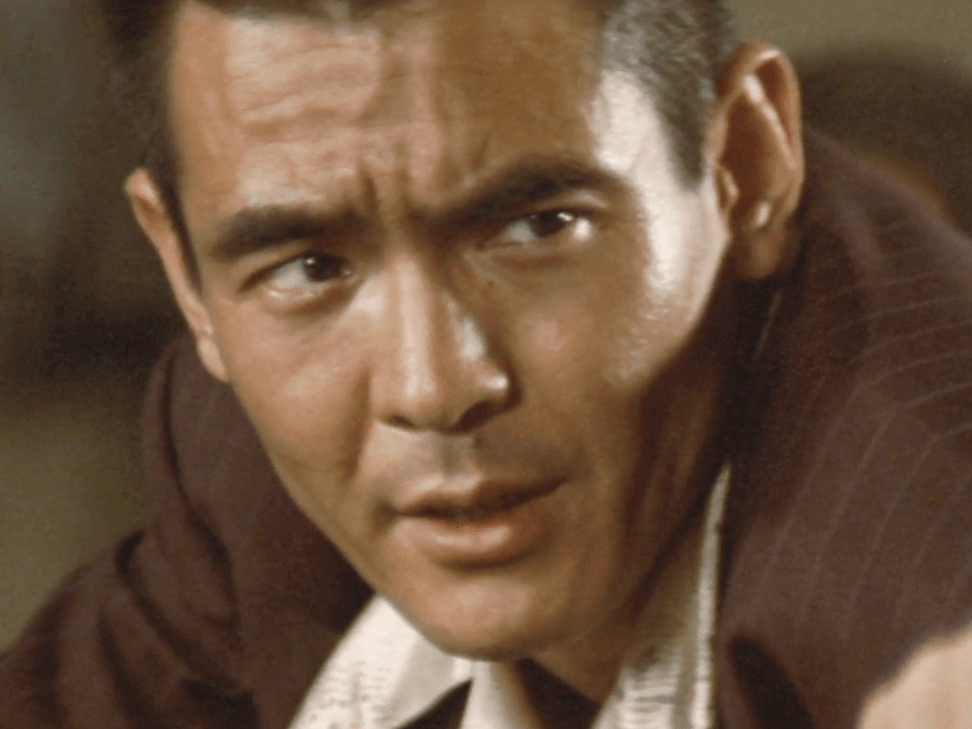
HIRONO Shōzō
(Sugawara Bunta)
YAMAMORI Underboss then HIRONO Boss
- Alignment: moral smart
- Likes: catching up with friends, trying to take down Yamamori, sparring with Takeda
- Dislikes: anything Yamamori
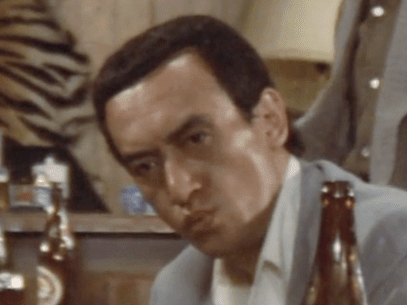
MATSUNAGA Hiroshi
(Narita Mikio)
YAMAMORI Underboss
- Alignment: neutral smart
- Likes: holidays, free time, retirement
- Dislikes: the yakuza life, actually
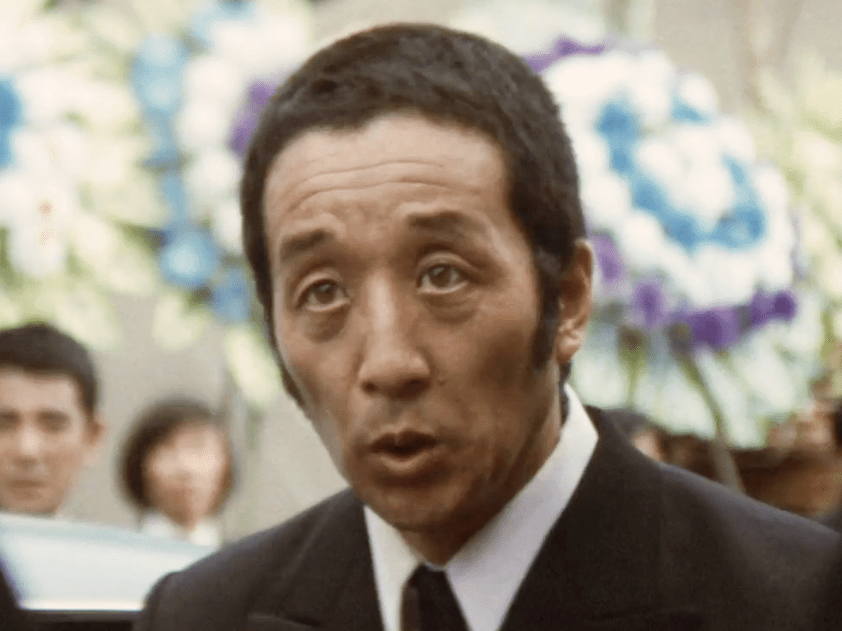
MAKIHARA Masakichi
(Tanaka Kunie)
YAMAMORI Underboss
- Alignment: immoral smart
- Likes: reporting back, taunting from a safe distance, bribing
- Dislikes: actual fighting
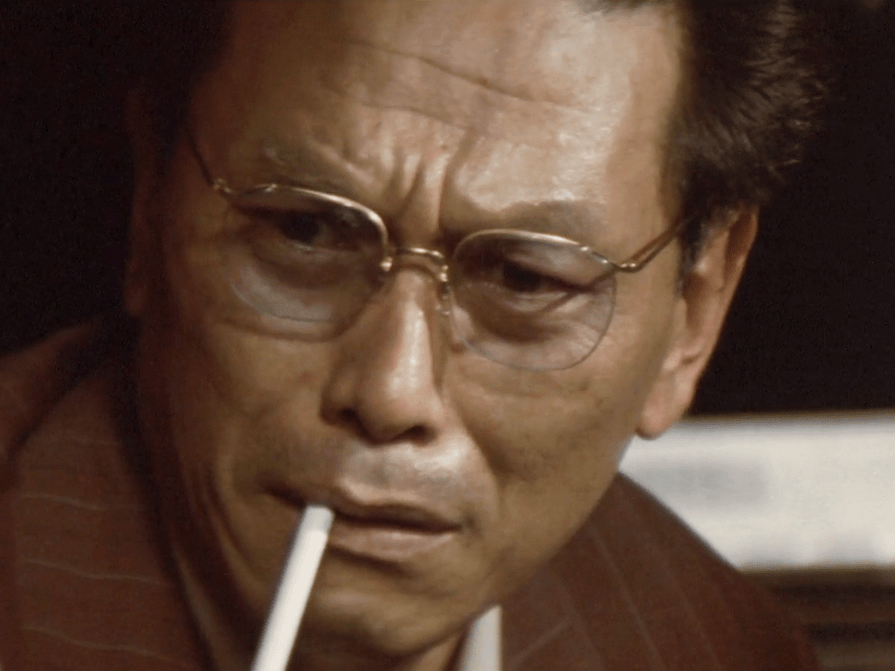
UCHIMOTO Noboru
(Kato Takeshi)
AKASHI Underboss
- Alignment: immoral dense
- Likes: sulking, putting the blame on others, pretending nothing happened
- Dislikes: any form of commitment
PLOT
The Hiroshima Proxy War Part 1: Hamazaki vs Komori (1962)
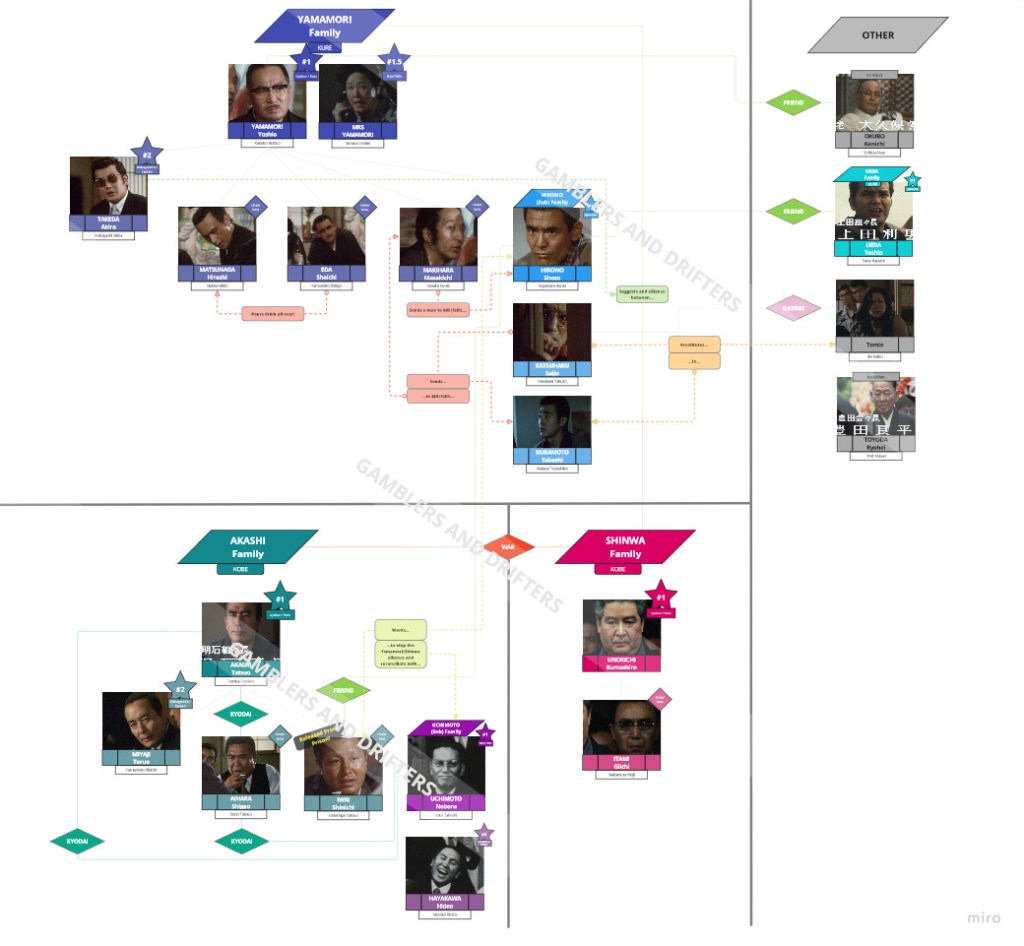
Run Time: 40:49 to 56:09 | Key Families: YAMAMORI – HIRONO (Sub-YAMAMORI) – AKASHI – UCHIMOTO (Sub-AKASHI) – UEDA – SHINWA – OTHER | Reference Chart (spoilers):
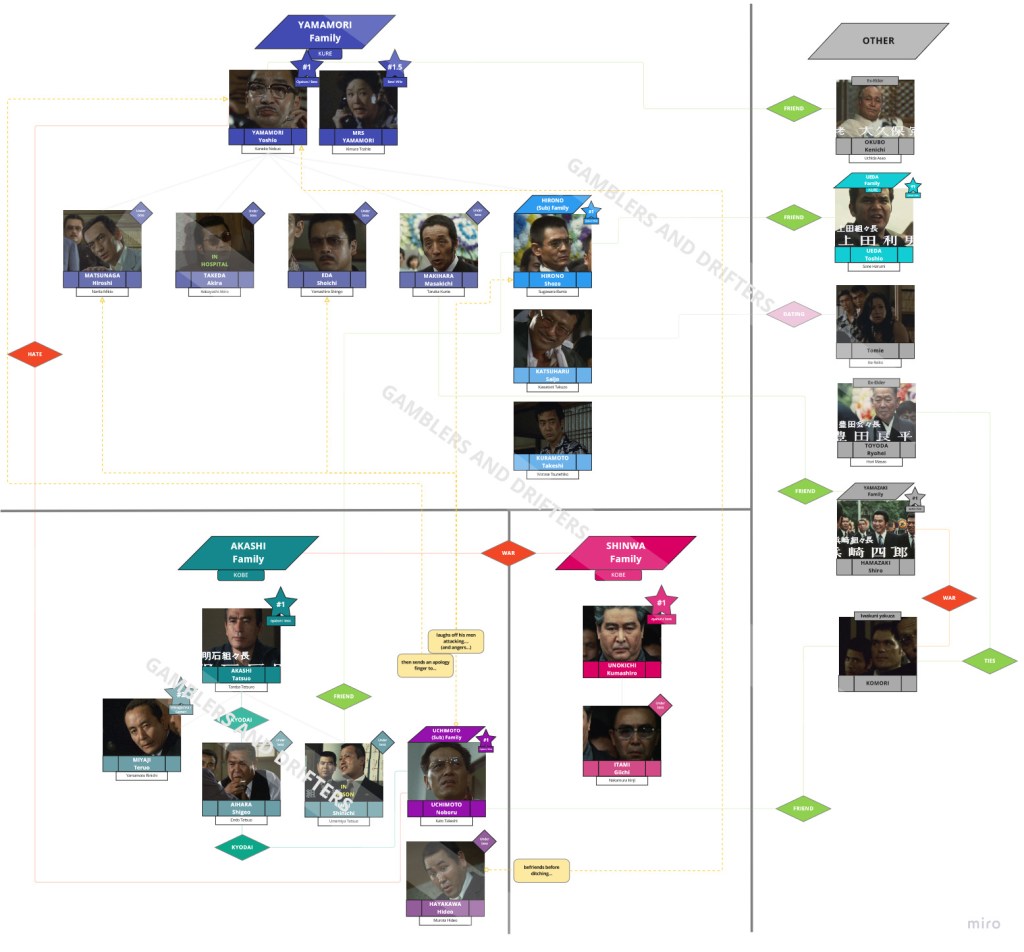
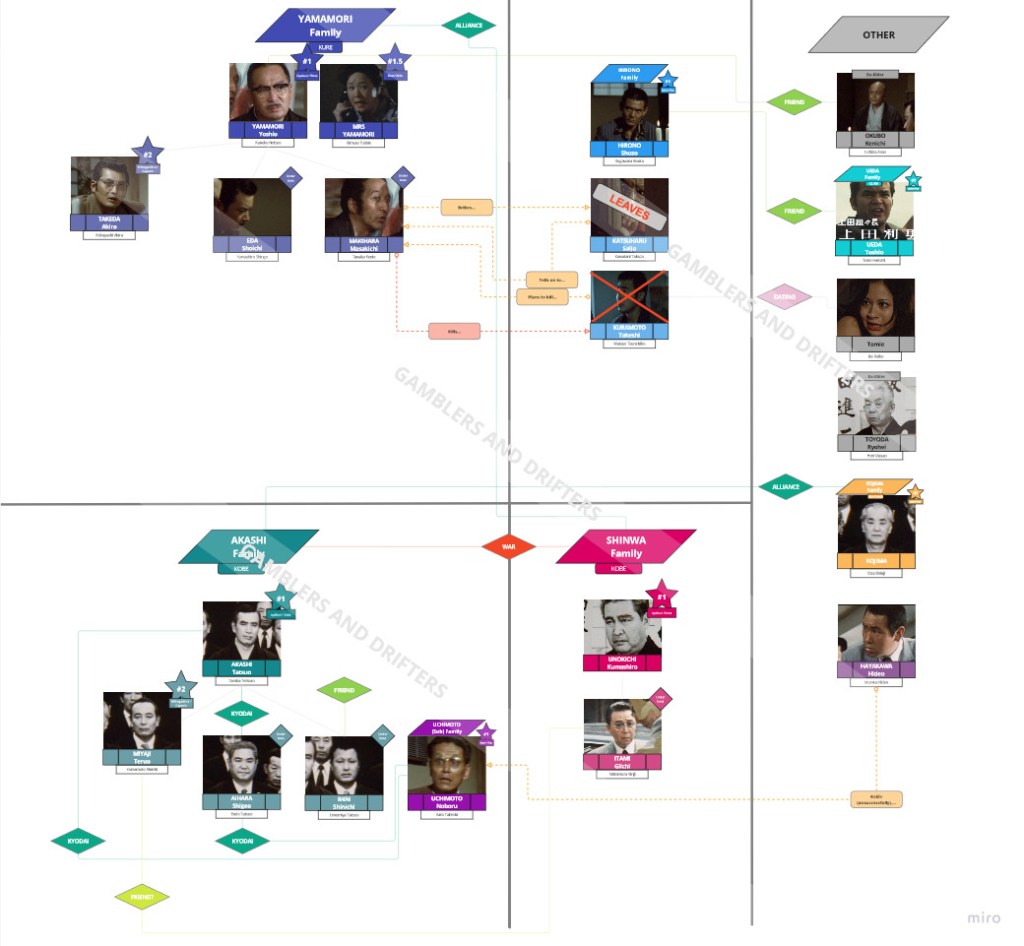
In 1962, the Hiroshima proxy war starts, pitting the Uchimoto-backed Komori family to the Makihara / Yamamori-backed family Hamazaki. Yamamori summons the gang (minus Takeda who, wisely, stayed out of the way in hospital) to urge them to act, stating that any fight against Uchimoto‘s goons is also their own – cue worried looks exchanged around the room (we see you, Eda). To even more weary looks around the room, he orders Hirono, Matsunaga, and Eda to dispatch their men ahead of a funeral the next day in order to make a stand, with Makihara leading the charge. Matsunaga, however, wisely suggests consolidating before attacking – only prompting Yamamori to cry until everyone apologies and agrees to go. Matsunaga: 0, Yamamori‘s crocodile tears: 1.
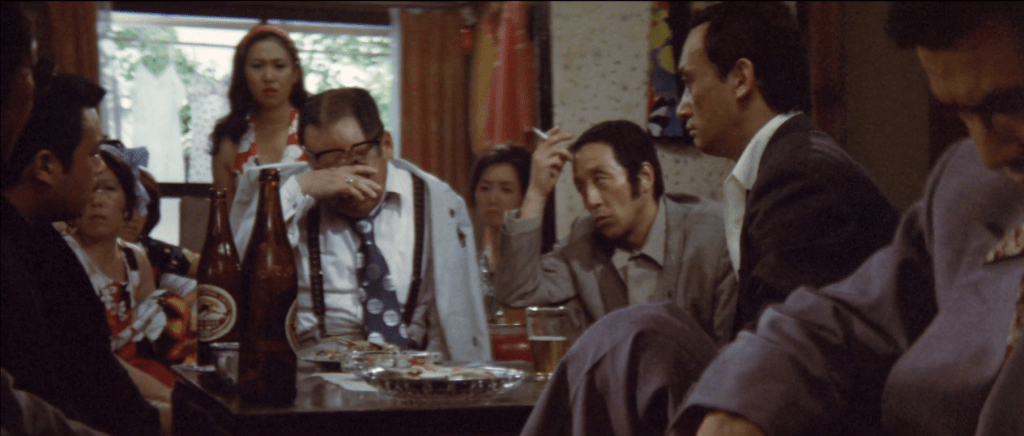
Note everyone’s reactions to the tears: Makihara is blasé and knows exactly what to do (pretend to comfort the boss); Eda, not yet used to Yamamori‘s tactics, is shocked and asks Matsunaga to apologise; Matsunaga, taken aback but well-aware that bosses are not worth defying to their face, flatly apologises with a hint of humour; and Hirono, an old hand at witnessing Yamamori‘s Express Tears technique, only mocks him behind his back (“Today’s tears really weren’t one of his best performances!“).
But, away from Yamamori, the trip to the funeral leaves plenty of time for everyone to think and reassess this controversial request. As the Yamamori underbosses arrive at the funeral, mini-trucks loaded with men, Hirono leads the charge on Makihara, asking him for the plan – which, of course, he hasn’t thought through. Matsunaga and Eda continue on, reminding Makihara that they’re still sworn brothers to Uchimoto and couldn’t possibly be involved in this conflict. Makihara protests, and Hirono all but laughs in his face, telling him that a strong leader like him is enough and that if not, they’ll see to a good burial for him. Panicked, Makihara chickens out himself – to Hamazaki‘s dismay and Hirono, Matsunaga and Eda‘s hilarity, as they all turns heels and go home. Ouch.
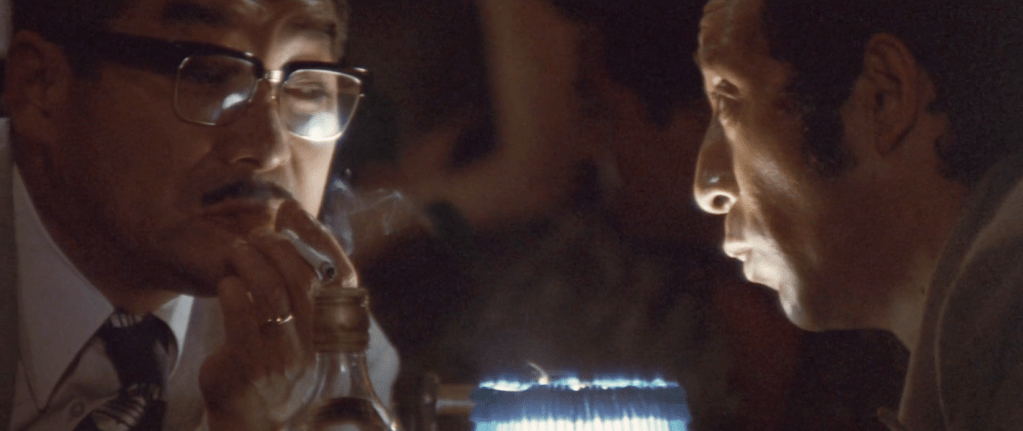
Back in Hiroshima, Makihara goes straight to Yamamori to tell him of the mutiny. But Yamamori is not worried. As he paws an extremely disinterested hostess, his little spy the bar’s mama (owner), who happens to be Hayakawa‘s wife, joins the party and tells them that her husband is not so loyal to Uchimoto – and could be turned if needed. Right on cue, Hayakawa arrives at the bar – and is quickly beckoned by Yamamori…
On the back wall of the Yamamori HQ, a large tiger skin can be seen – the very same than the one Muraoka used to have on display, indicating that Yamamori has moved into the plush office of his predecessor. Why waste money refurbishing anything!
Back at the Yamamori HQ, Makihara informs Hirono, Eda, and Matsunaga of the developing situation with Hayakawa – with whom an undercover alliance, as the Uchimoto troop leader, would render Uchimoto useless. Hirono immediately calls out the laughable situation the Yamamori group is putting themselves in, only able to crush someone else by twisting the arm of a turncoat. Matsunaga is also unimpressed, pointing out the danger of using utterly opportunistic men like Hayakawa and threatening to leave if he joins. The men continue on arguing before Makihara suggests that the ongoing war is really one between Hirono and Uchimoto – prompting Hirono to erupt in anger and almost reduce Makihara to tears.
This is the very first time we hear Matsunaga , ever the model yakuza, threaten to leave. Weariness with hysterical bosses and scummy colleagues is settling in – and will have consequences!
The argument is interrupted by smoke: something has been thrown into the HQ! The men panic and throw themselves behind tables – but it’s only a smoke bomb, aka a very, very bad joke. Unfortunately for them, Eda got a glimpse of the men and identifies them as… Uchimoto troops.
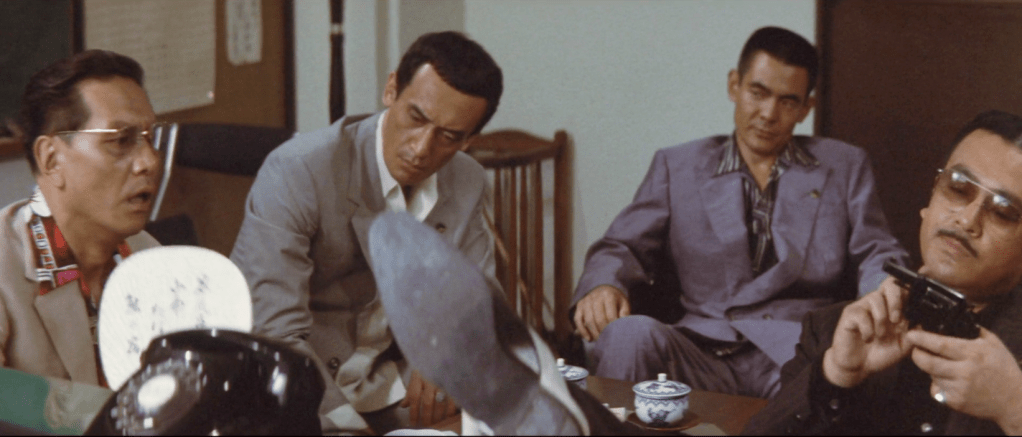
Hirono, Eda, and Matsunaga visit Uchimoto to ask for an explanation, and Uchimoto flippantly laughs the matter off. Unfazed and exchanging a quick nod with Hirono, Matsunaga calmly informs Uchimoto that the three men and the absent Takeda have decided to end their kyōdai bond with Uchimoto, laying the ceremony cups on the table as Eda playfully swings a gun around for good measure. As they leave, Uchimoto winces, aware of a major tactical error on his side.
The next day, Hayakawa visits the Yamamori office with a very special gift from his boss Uchimoto: his finger! Hayakawa also informs Yamamori that Uchimoto has deserted his men to flee back to his Akashi new masters in Kobe, hinting heavily that he may be looking for a “better” boss, and could reform a new Uchimoto family under the Yamamori umbrella. But once more, it’s Hirono who points out the obvious: this could not be done without killing Uchimoto, and is sure to provoke much ire from Uchimoto allies in Kobe.
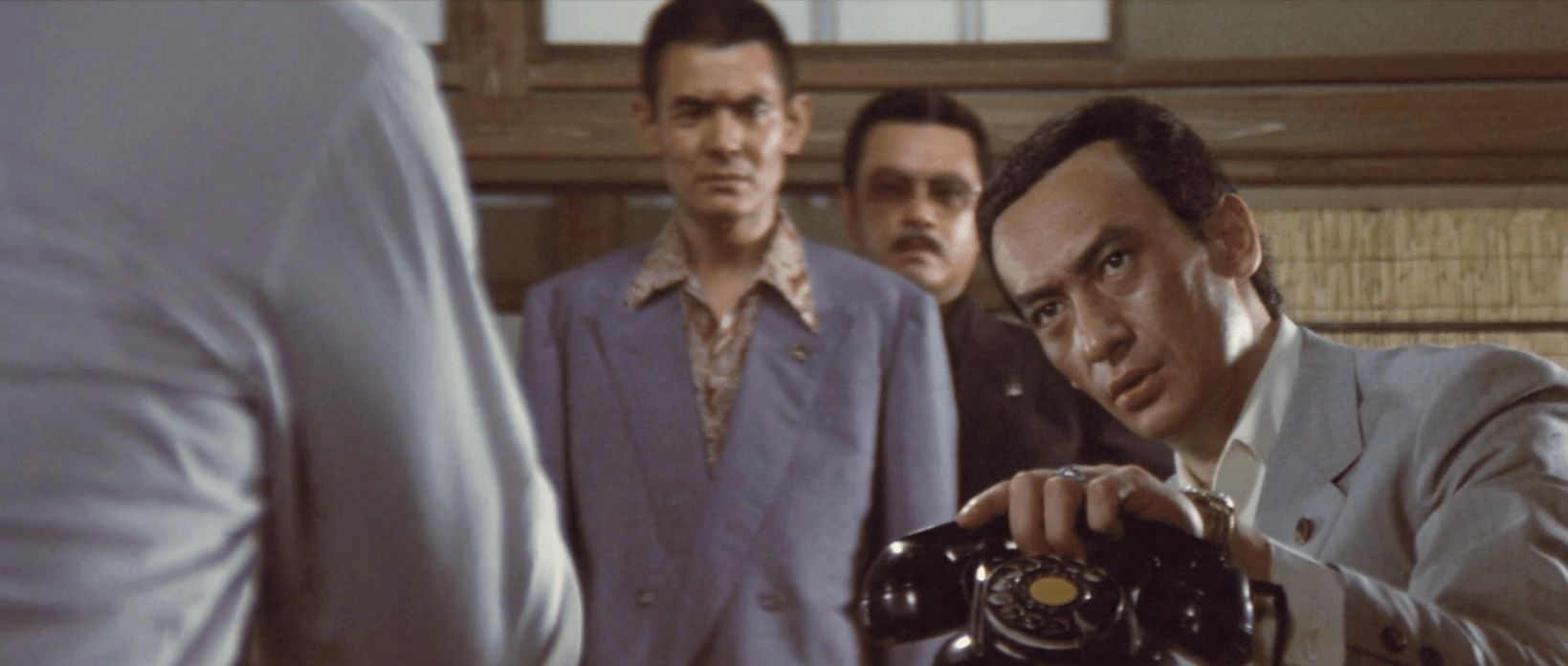
Right on cue, the phone rings, raising the anxiety to 11 in the room. Matsunaga picks up: it is indeed the Akashi family who needs to speak about Uchimoto, with Miyaji and Aihara on their way to the Yamamori HQ… whatever that may mean. Yamamori panics as the other men leave to get ready for war.
As Hirono camps in their HQ, ready to take on potential invaders, he gets a phone call: Mrs Yamamori is panicked, having heard men with Kobe accents outside of the Yamamori residence. Hirono, ever the good boy, immediately goes on-site – but only finds some harmless sailors talking in Kobe dialect, and reassures Mrs Yamamori, who bitterly points out that Hirono is the only underboss who answered her calls (unsurprisingly considering risk-adverse marshmallows like Makihara). Hirono offers to leave a few men with the Yamamori, but this is not enough for Mrs Yamamori, who wants a promise there and then that Hirono will put his life on the line for her husband – and takes his embarrassed silence as an immediate yes, which she relays on to her husband (who pretends he was asleep during the whole panic, convincing absolutely nobody).
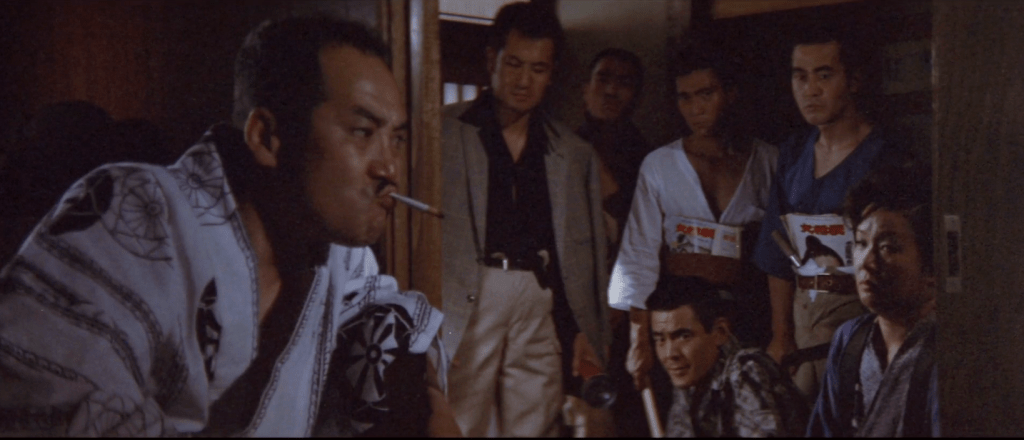
Yamamori, fuming, reveals that he’s also had some troubling news about Hayakawa, who ran straight back to Uchimoto in Kobe as soon as the Akashi confirmed their renewed support for the spineless boss. A collective sigh is silently shared in the room.
The Hiroshima Proxy War Part 2: Consolidations and Temporary Peace (1962)
Run Time: 56:09 to 1:04:41 | Key Families: YAMAMORI – HIRONO (Sub-YAMAMORI) – AKASHI – UCHIMOTO (Sub-AKASHI) – UEDA – SHINWA – OTHER | Reference Chart (spoilers):
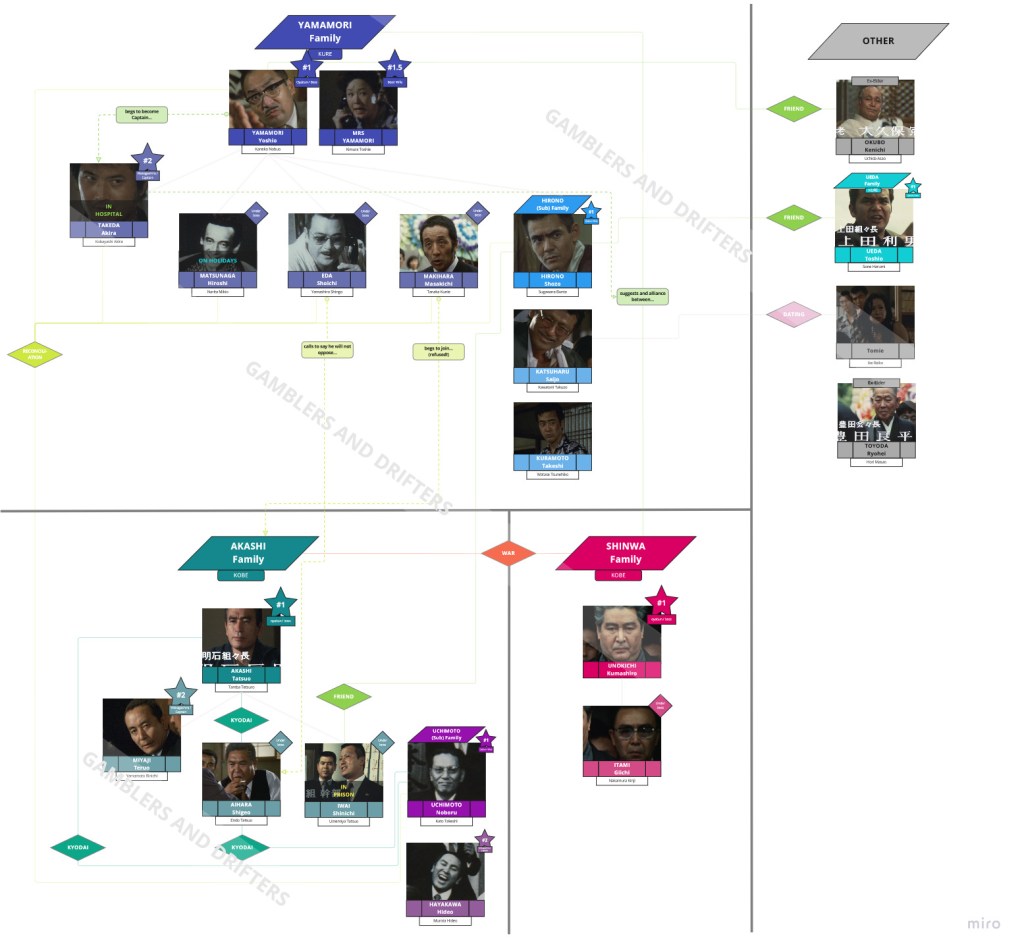
In Kobe, the Akashi underbosses Aihara and Miyaji secretly summon their old friend Hirono to ask if he will support or oppose them – a question that surprises Hirono, who reminds them that he’s bound to whatever Yamamori decides. What Hirono does not yet know however, is that that the Hamazaki vs Komori conflict is now over, having been mediated by Uchimoto and elder Toyoda.
Furthermore, Hirono learns from Aihara that, one by one, all the Yamamori underbosses have carefully covered their backs with the Akashi, eager to avoid trouble now that the power is swinging in the Akashi‘s direction. Makihara begged to join the Akashi (and, presumably, was flatly refused); Eda called Aihara directly to confirm he would not oppose the Akashi; Matsunaga, clearly at the end of his tether, simply went on holidays and swiched on his out-of-office; and the elusive Takeda, still in hospital, has actively avoided any involvement with the developing situation. As the last one standing, Aihara asks Hirono to formally make peace with Uchimoto, in order to avoid further issues; Hirono, sensing a net closing on him again, remains silent.
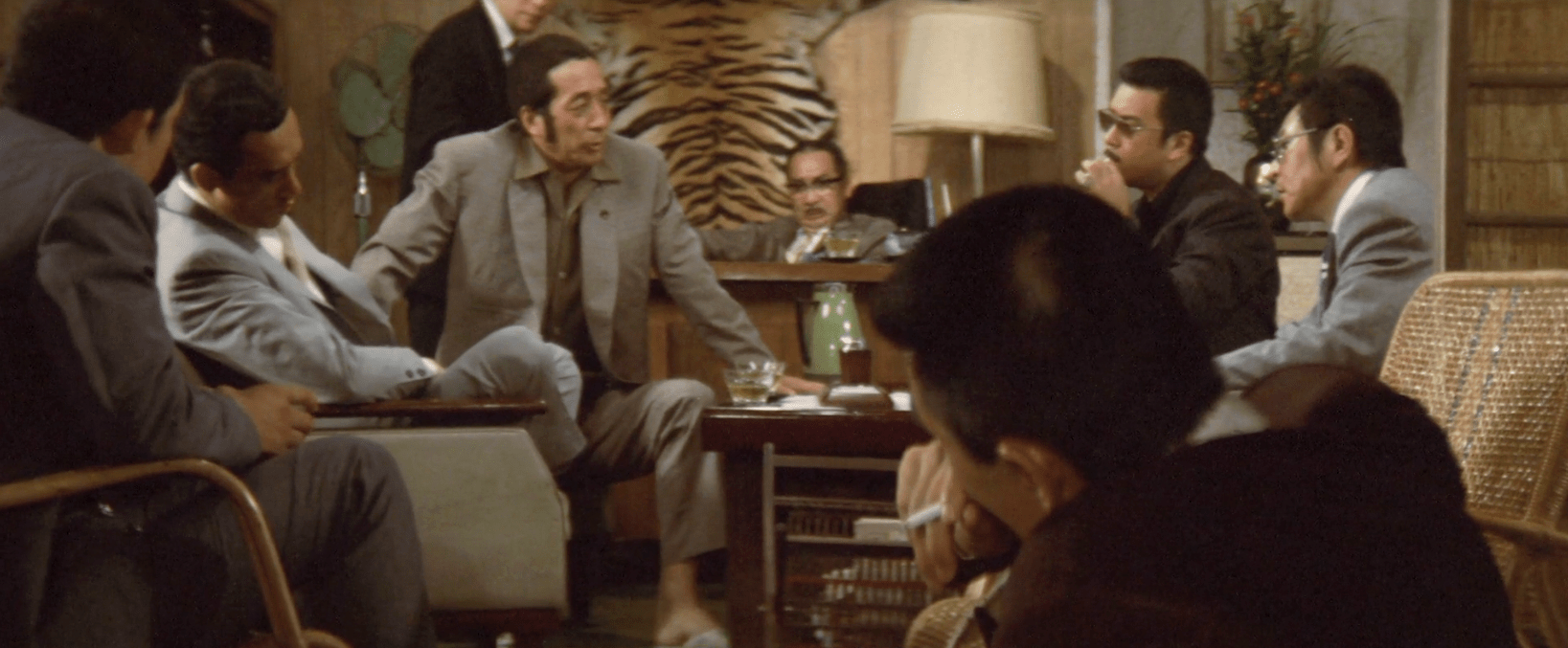
Back at the Yamamori HQ (where Yamamori is receiving a very odd foot treatment), Makihara informs the group of what Hirono already knows: the Hamazaki vs Komori conflict is now over, and all are invited to the reconciliation ceremony. Eda and Matsunaga are unhappy (with Matsunaga even pulling out a nose hair in anger) (?), pointing out that this is another point for Uchimoto. Makihara waxes lyrical about the deal and how he sang the praises of the Yamamori family and their greatness to everyone in Kobe.
Unfortunately for Makihara, one person knows the truth, and then some: Hirono, who proceeds to methodically annihilate everyone in the room. He firstly asks Yamamori why he sent Makihara to broker a deal with the Akashi (under the excuse of attending a funeral), just as he let his underbosses oppose the Akashi alone, even throwing them under the bus in the process, with a quote he repeats back to Yamamori word for word; Yamamori has no answer. Next, Hirono tells Makihara that Aihara and Miyaji have spilled the beans about him begging to join the Akashi, for which he also has no answer – to Yamamori‘s fury. Finally, Hirono looks around the room, informing the group that he knows of the other shady deals that were done with the Akashi in the background – and that the only way forward for those who refuse to be collateral damage once everyone has chickened out is indeed to reconciliate with Uchimoto.
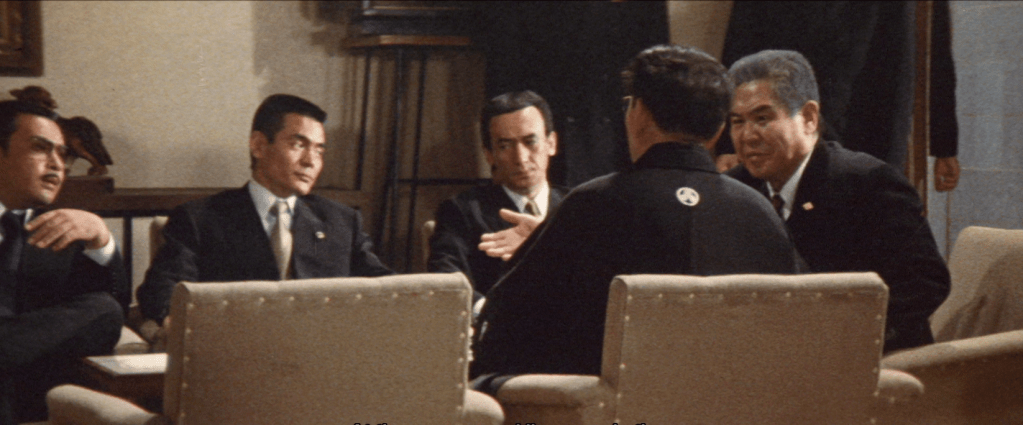
And that is what the Yamamori underbosses Hirono, Matsunaga, and Eda do at the reconciliation ceremony, unimpressed but willing to go the extra mile to avoid unnecessary trouble. This event marks a clear victory for Uchimoto, who solidifies his power by officialising Hayakawa‘s position as Captain, and becomes kyōdai with the powerful Akashi Tatsuo himself.
As 1962 draws to an end, Yamamori realises he needs to act, and fast. Time to turn to the Yamamori family dark horse, the one who has yet to reveal their full potential: Takeda.
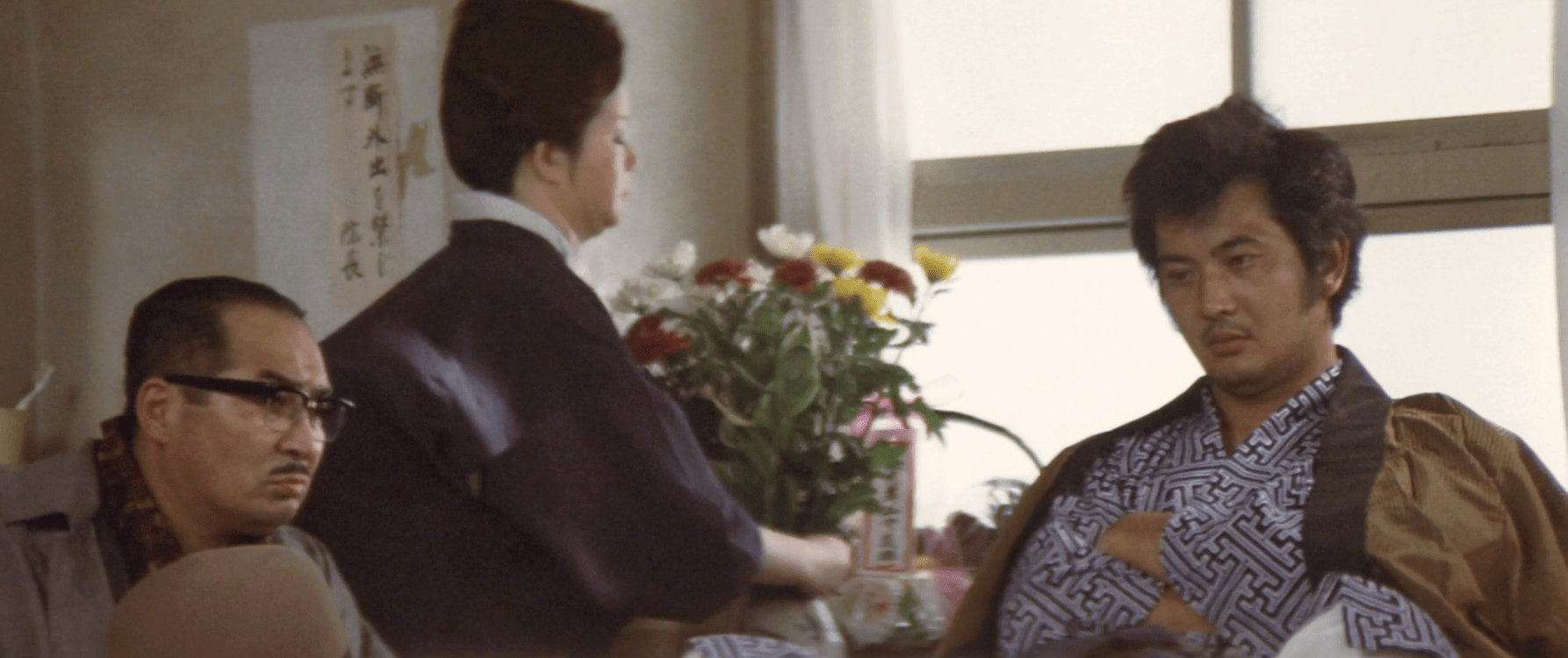
Yamamori and Mrs Yamamori visit Takeda in hospital, whining about Uchimoto, who stopped greeting Yamamori in the streets, and Hirono, who always disrupts Yamamori‘s plans and is “a pawn of the Akashi, even worse than Hayakawa“. Yamamori, all but cooing at Takeda, informs him that he is reviving the post of Captain in the family (which was abolished during the Yamamori / Muraoka merger), and that he wants Takeda to take over.
In a trick as old as time, to address Takeda (Akira), Yamamori uses the ultra-familiar “Aki-chan”, an overly affectionate nickname which does not impress Takeda, by now well aware of Yamamori ‘s rough manipulation techniques.
Takeda hesitates, but Yamamori insists – Hirono and Matsunaga always side together, Eda is all bark and no bite, and Makihara has no guts (all correct assessments) – and, on that note, Yamamori starts fake crying for good measure. Takeda eventually relents, on the condition that he can run the team “his own way”. Yamamori accepts, and nets himself a new Captain.
When Takeda accepts Yamamori‘s offer, Yamamori is thrilled, saying that he was thinking of naming him successor anyway. Watch Takeda – who visibly sighs at the empty promise!
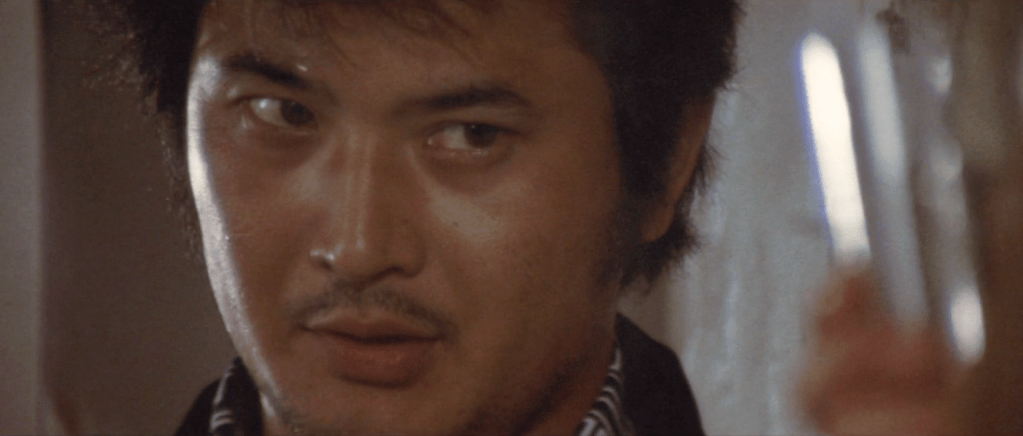
Takeda jumps straight into business, discussing a deal brought by the powerful Shinwa family (Kobe giants and rivals to the Akashi) to form an alliance. Yamamori wonders if the Shinwa family is powerful enough – which Takeda confirms, pitching them as the only force strong enough to stand against the Akashi and, therefore, the perfect partners for the Yamamori family.
“Someone brought in a proposal for an alliance…“, “My men told me already [that Uchimoto wasn’t greeting Yamamori anymore]“, information on the Shinwa family – Takeda might have been in hospital all this time, but he has certainly not lost one single piece of information or inch of influence during his stay.
The Hiroshima Proxy War Part 3: Backstabs and Failed Assassinations (1963-1)
Run Time: 1:04:41 to 1:18:42 | Key Families: YAMAMORI – HIRONO (Sub-YAMAMORI) – AKASHI – UCHIMOTO (Sub-AKASHI) – UEDA – SHINWA – OTHER | Reference Chart (spoilers):
It’s New Year 1963 at the Yamamori HQ, where the freshly slick-haired Takeda is officially appointed as the Captain, to everyone’s general apathy. Takeda announces the alliance with Shinwa, before geisha are called in to entertain the gang.
But the men still have important business to discuss. As Yamamori gallivants with geisha, and with Makihara the snitch peeking from afar, Takeda approaches Hirono to ask him to get his acquaintance Toyoda to officiate the new alliance. But Hirono and Matsunaga attempt to discourage Takeda, loudly commenting on the sorry state of the Yamamori family, not fit for an alliance and still courting two-bit players from rival families like Hayakawa (indeed, as Matsunaga notes, all the geisha are from Hayakawa‘s club).
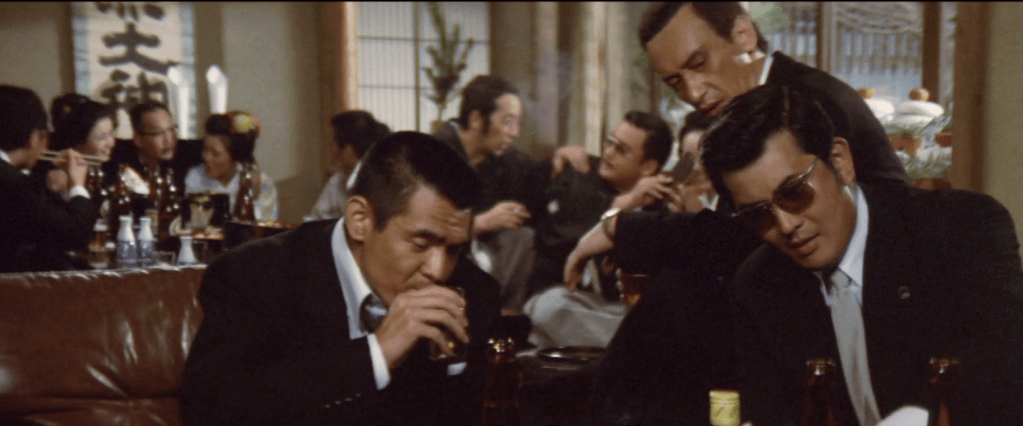
Eda, in another drunken meddling mood, jumps in (pouring beer all over Matsunaga‘s lap, much to his displeasure) to defend Takeda – who completely ignores him. But the unhappiest is Hirono, who tells the group that he will go along with the plan, but that this will mean trouble for his relationship with the Akashi – something to consider carefully. In response, Takeda curtly asks Hirono to stop meeting his Akashi friends for the time being, but Hirono protests loudly that Yamamori is more than happy to buddy up with the enemy when convenient, so the rule should apply to all or none at all.
Note Makihara‘s location throughout this scene – moving around the room with one eye on the group, always within earshot and peeking from the background. Not that Hirono cares who hears him complain about Yamamori…
As Hirono continues to rant in a now silent room, accusing Yamamori of never taking a clear stand on anything, and saying that his own friends and safety should therefore come first, Eda jumps in once more to attack Hirono and defend Takeda, only to be rebuffed by Matsunaga who accuses him of only courting favours with Takeda because he wants to be his successor. Eda takes umbrage and attempts to start a little brawl with Matsunaga, quickly stopped by Hirono and Takeda. And, in the background, just as expected, Makihara scutters to Yamamori to give a detailed account of the conversation.
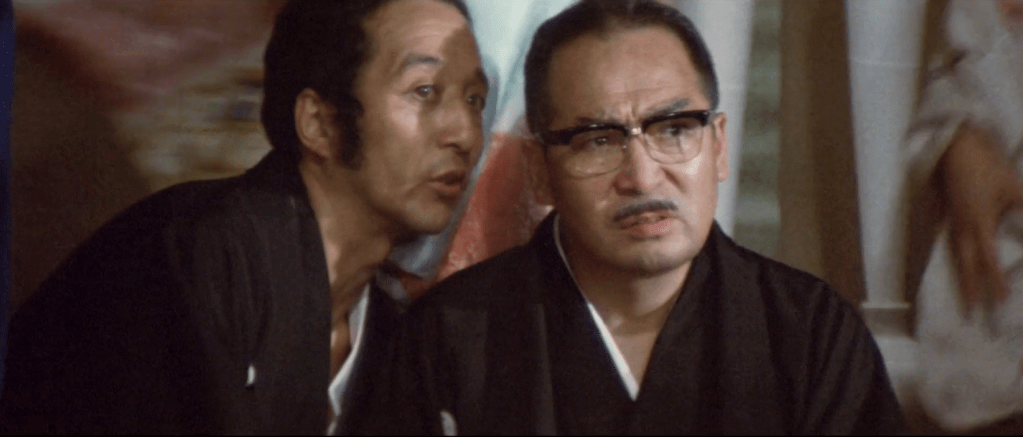
Retaliation for the party conversations comes swiftly: while walking around a dark alley, kindly complimenting some geisha walking around, Hirono and his right-hand man Kuramoto get jumped by a man with a gun, aiming to kill Hirono. The attempt fails miserably (the gun safety was still on…) and the man escapes – but Hirono knows which family this man belongs to (spoiler: it may involve a sneaky boss and his #1 lackey)…
As Kuramoto eats a recovery ramen in a near-by dark alley, fellow Hirono member Katsuharu has a bright idea to help his boss Hirono – which, in this family, is 100% a recipe for disaster. Katsuharu confirms to Kuramoto that the hitman was from the Makihara family, and suggests taking immediate revenga. Kuramoto needs no convincing, and agrres to let Katsuharu take him to Makihara – but not before spending his last night as a free man with Tomie, leisurely prostituted (again!) by worst-ever boyfriend Katsuharu for the occasion.
Tomie‘s harrowing encounter with Kuramoto is another remninder of women’s precarious place in the yakuza world of the time – disposable, used and abused, and mere pawns when the situation requires (see Yasuko in Plot Deep Dive: Battles Without Honor and Humanity [2] – Deadly Fight in Hiroshima (1973)). Only a woman of Mrs Yamamori‘s rank is spared the worst – but we can only imagine her long journey to get there.
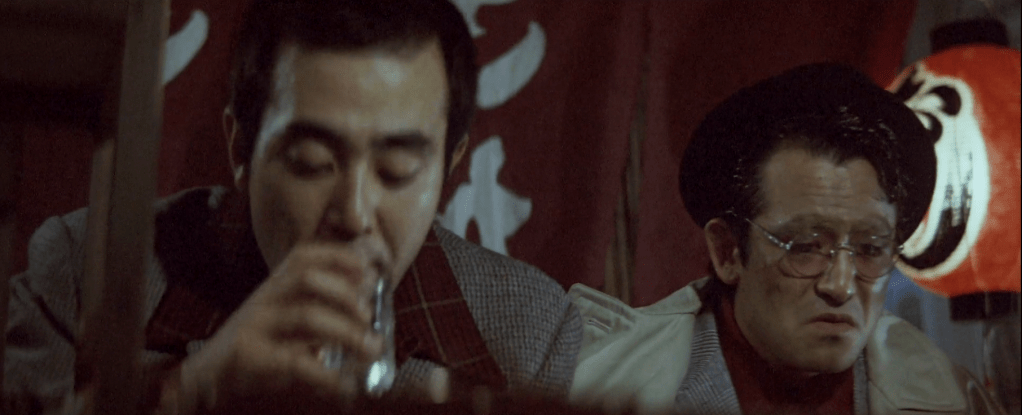
Near-by, a blissfully unaware Makihara is at work plotting, trying to convince Uchimoto to meet Yamamori. Uchimoto is reluctant, citing Hirono as a blocker – to which Makihara calmly responds that he’ll be out of the picture soon, confirming Katsuharu‘s intel on the source of the hit against Hirono.
But in the shadows lurk Katsuharu and Kuramoto, ready for a fatal hit on the men. Springing into action, Kuramoto runs towards Makihara, shouting his name as he fires his gun. What ensues is what is possibly the most incompetent assassination attempt of the episode (and there’s competition), with Kuramoto shooting at everything but Makihara, failing to shoot him even through the car window, and then failing to shoot at the car or to hold on to it, before running out of bullets and running into the night, face uncovered.
Meanwhile, in a calmer part of town, Hirono is toasting his friend’s Iwai‘s release on bail around a nice meal and sake. Iwai asks Hirono if the rumour is true: will the Yamamori form an alliance with Shinwa, as Takeda wishes? Hirono confirms, and reminds Iwai that he’s unable to affect this situation, not being in the good graces of the Yamamori family. Iwai suggests that Hirono then reconciles with Uchimoto, in order to allow for the Akashi to maintain some influence in Hiroshima.
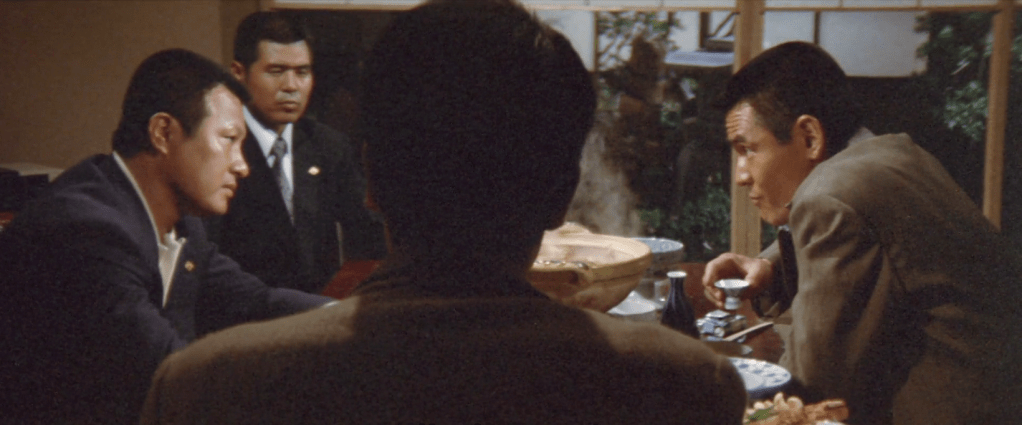
Hirono is unsure, but Iwai presses on: what will become of undesirable Hirono under this new alliance? Will more Yamamori men try to kill him? And, finally, shouldn’t Hirono use this opportunity to take over Hiroshima, with the Akashi‘s support as they know they can’t count on Uchimoto? But Hirono can practically taste the troubles that would come with these new ambitions, and is unwilling to be the yakuza who turns against his boss – and flatly declines. Iwai is frustrated, but insists that the Yamamori at least reconciliate with Uchimoto, so that the Akashi do not to lose all footing in Hiroshima.
As usual, Hirono can’t have a meal in peace without finding out his men did something wrong – and indeed a phone call interrupts the release dinner, informing Hirono that Katsuharu and Kuramoto have unsuccesfully – but openly – attemped an assassination on Makihara, with Uchimoto present. Hirono is irate, beating Kuramoto to an inch of his life and pointing out that this unasked for coup could be the downfall of the Hirono family.
Note how worried the actors behind Hirono look. It’s not just acting – Hirono actor Sugawara Bunta had the unfortunate habit of hitting fellow actors a little too realistically, causing much bruising and regrets from whoever was on the receiving end. Still, this is nothing for Kuramoto actor Watase Tsunehiko – who performed the assassination’s car stunt himself, not once – but twice! More details in the Introduction to Battles Without Honor and Humanity (1973-74).
As a feverish and very bruised Kuramoto recovers, Hirono, finally calm, comes in to explain his anger at this yakuza faux-pas: killing your rivals doesn’t mean victory in these modern yakuza times, and therefore this act wa spointless and could mean serious trouble. The phone ring to interrupt the wise lecture: it’s Takeda, asking Hirono how his meeting with Iwai went.
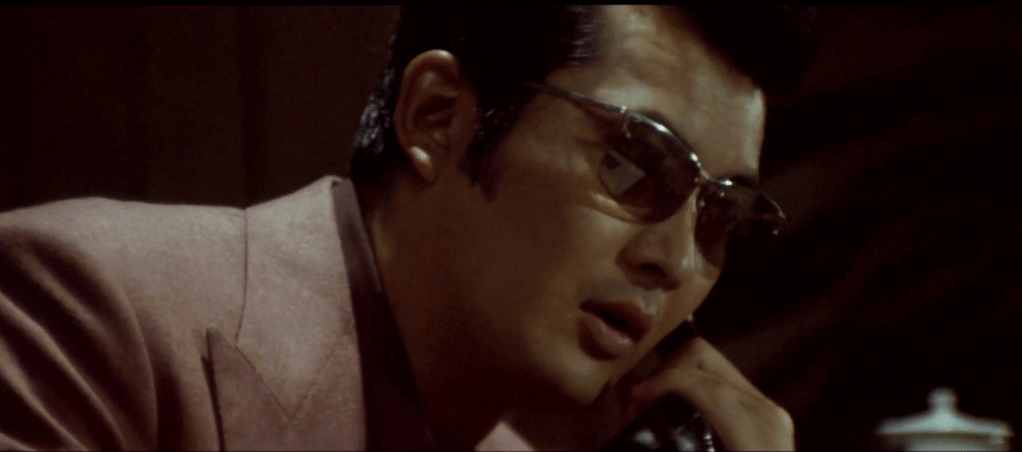
Why this phone call? It was only at the recent New Year party that Takeda asked Hirono to stop meeting his Akashi friends temporarily – an order that has obviously ignored by Hirono, who toasted Iwai‘s release. Takeda gently reminds Hirono that he has the power to keep a close eye on him and his meetings (which Hirono immediately calls out), while confronting him on his disobedience.
Hirono keeps his cards close to his chest, leaving Takeda unimpressed but unwilling to insist. However, Hirono has a plan, and changes tack immediately to inform Takeda that he now agrees to the alliance with Shinwa. Step one in his plan to drive out Yamamori out… somehow.
The Hiroshima Proxy War Part 4: Dramatic Alliances and Departures (1963-2)
Run Time: 1:18:42 to 1:32:16 | Key Families: YAMAMORI – HIRONO (Sub-YAMAMORI) – AKASHI – UCHIMOTO (Sub-AKASHI) – UEDA – SHINWA – KOJIMA – OTHER | Reference Chart (spoilers):
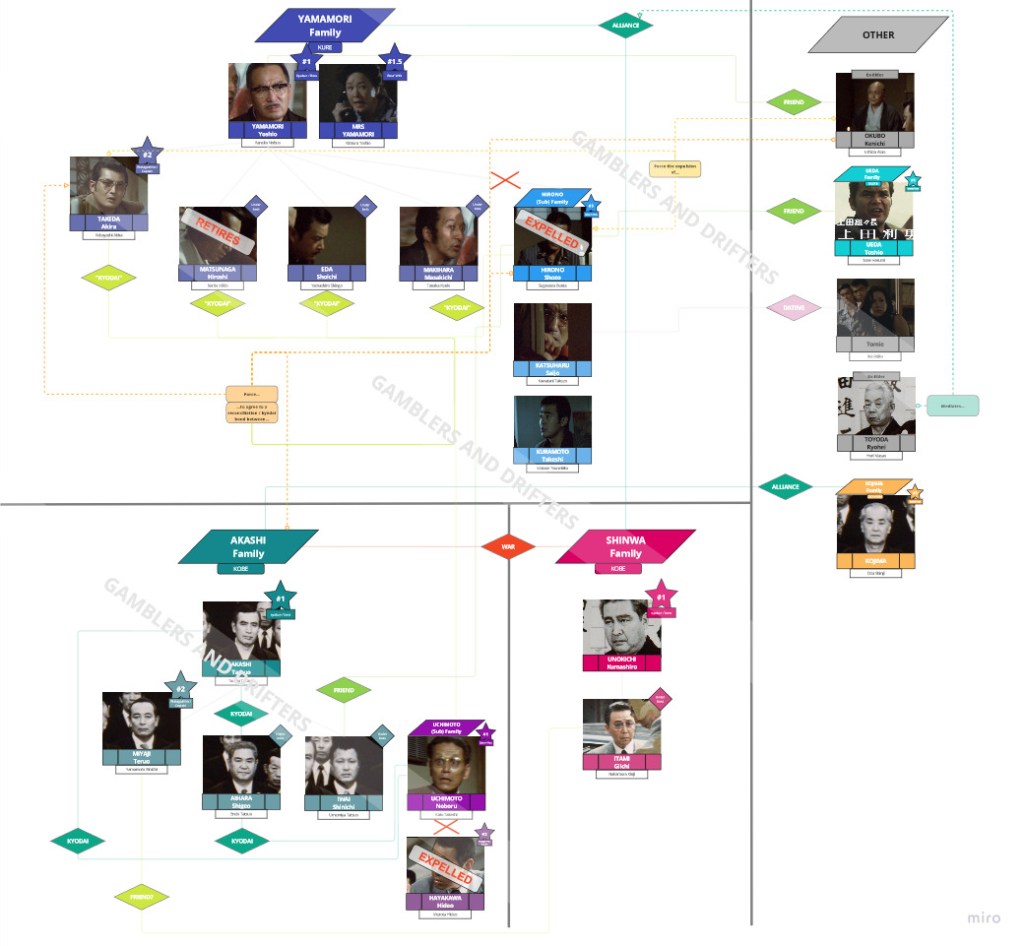
In June 1963, the Yamamori / Shinwa alliance goes ahead, mediated by Toyoda. In response, the Akashi family formalises and alliance with the Kojima family, a powerful Okayama group, and organises a trip to meet the Yamamori underbosses – aiming to force them to reconciliate with Uchimoto.
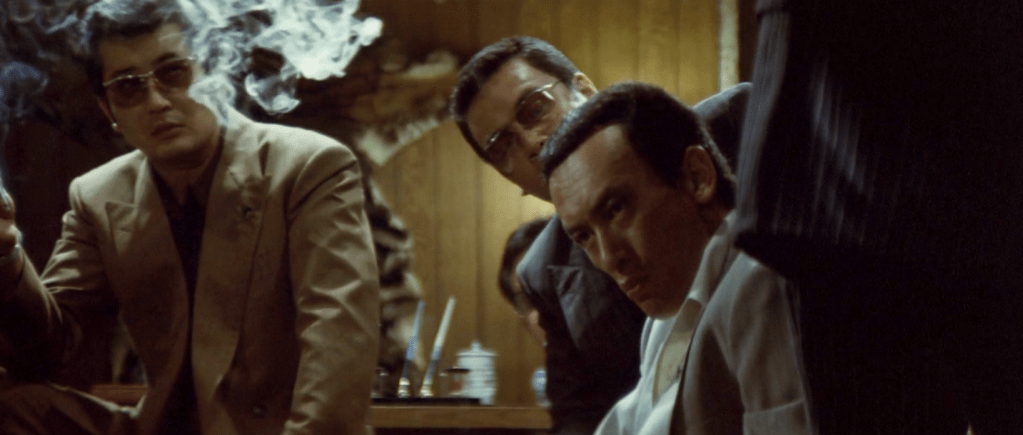
The news quickly gets to Takeda‘s ears, who now understands that Hirono kept this crucial information about Iwai‘s request for a reconciliation from him – all to better twist his arm on the matter. Confronted once more by Takeda, Hirono is unbothered, offering to take Takeda‘s refusal to reconciliate to the Akashi… if everyone in the room agrees. Eda protests, and Matsunaga asks Hirono what he’ll do – to which Hirono responds that he’ll see on the moment, daring everyone present to refuse first if they so wish and bear the violent consequences, attracting more anger from Takeda who rightly states that he cannot permit this divergence as Captain.
The fateful meeting day arrives. Takeda, Eda, Matsunaga, and Hirono reach the premises – only to be met with a sea of well-armed Akashi men (strategy #1), lending further weight to Hirono‘s warning should they refuse the reconciliation. Iwai, exchanging a knowing glance with Hirono, leads the group to the meeting room where Uchimoto, Miyaji, and Aihara await.
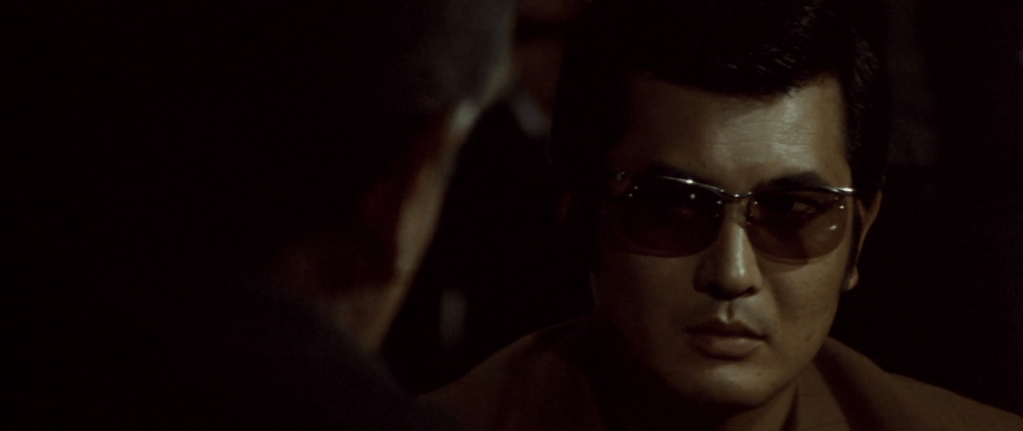
Note Takeda‘s resigned and angry expression. He knows he’s walked right into a trap with only one outcome: the one he seeked to avoid at all cost, aka the reconciliation with Uchimoto and de-facto weakening of the Yamamori alliance with Akashi rival group Shinwa.
Uchimoto, true to his childish self, immediately sulks, loudly shoving ice cubes into a glass – to the embarrassment of Miyaji, Aihara, and Hirono. Hirono starts nonetheless, calmly explaining that, after a long consultation, his Yamamori Captain and fellow Yamamori underbosses are refusing to reconciliate with Uchimoto. Uchimoto jumps up, outraged – but before he or any the Yamamori men can say a word, the lights suddenly go out… Interesting timing and setting when 100 armed men are in a room behind you. (strategy #2)
Again, note the characters’ expressions and reactions. Two people show zero panic: Iwai, presumably well aware of this “unfortunate accident”; and Takeda, presumably well aware of the endless tricks that will be played to get the reconciliation agrred upon.
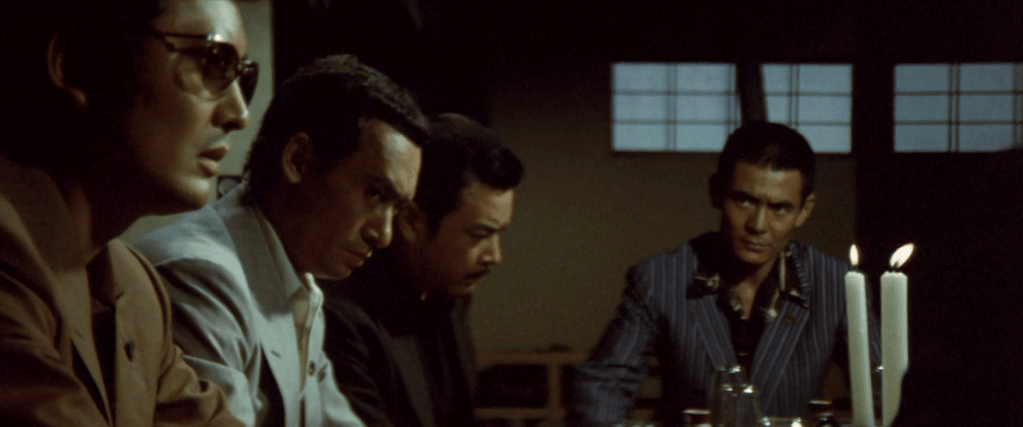
Dimly lit by candlelight, a maudlin good cop Aihara takes over the conversation: the disagreements between Uchimoto and Yamamori stemmed from old, external family struggles which are now behind them; and Uchimoto did cut a finger in apology; can’t the Yamamori men let this go and finally allow peace for everyone (strategy #3)? Takeda retorts that the group has already apologised to Uchimoto, and that the matter should already be settled. Bad cop Miyaji continues on: yes, the Yamamori apologised, but the finger incident has not been appropriatingly addressed. Therefore, for the Akashi, nothing less than reconciliating and restoring their kyōdai bond with Uchimoto will do to avoid completely severing ties with the Yamamori (strategy #4) – but, as Takeda points out, this is the very thing they cannot do (Uchimoto being an enemy of the Shinwa).
Miyaji changes tack, singling out the Yamamori men (strategy #5): is this really what Matsunaga wants? (he’s not sure, earning himself a big frown and head turn from Takeda) Iwai jumps onto Eda – what does he think of all this? (not much, as usual)
Aihara turns to cornered Takeda, assuring him that his concerns over angering the Shinwa family, if they reconcile with their enemy Uchimoto, are unfounded: Aihara knows the Shinwa quite well, and it’s common knowledge that the alliance with the Yamamori is but a business deal – telling the unimpressed Takeda (squinting with anger) that the Shinwa will not be jumping to action so quickly should the Yamamori call on them (strategy #6). Miyaji, all smiles, even offers to call Shinwa underboss Itami to confirm (strategy #7), stopped by a thoroughly humiliated and defeated Takeda who assures them that he understands exactly what they’re saying.
But that’s not all! As the final nail in the coffin of Takeda‘s plans, an old friend enters the room: it’s elder Okubo, all laughs and good mood. Okubo asks Takeda if a decision has been made about the reconciliation. Indeed, Iwai confirms that the group called Okubo to officiate the reconciliation as everyone assumed it would happen (strategy #8), while ensuring that Yamamori would agree to this reconciliation if it is officiated by his old friend (strategy #9). Miyaji adds that Takeda is free to say no of course, but that doing so now would make extremely powerful elder Okubo lose face (strategy #9) – and therefore cause Takeda to lose all standing in Hiroshima (strategy #10). Out of options, abandoned by all, Takeda sighs quietly and agrees to Okubo officiating the reconciliation with Uchimoto.
Where is Yamamori? It seems odd that the well-informed boss could have missed out on the fact that the whole meeting was a trap for his Captain Takeda, especially considering that it directly involved his old friend Okubo. One unkind conclusion could be that he knew this meeting was coming and was necessary, and that he therefore sent Takeda to the slaughter to be humiliated on his behalf, as he washed his hand of the whole matter from afar… Would Yamamori do such a thing?
Thankfully, someone else is there to cause a rucus and divert attention from Takeda‘s defeat: it’s Uchimoto, who is very unhappy about reconciliating with his nemesis Hirono. His protests are unceremoniously brushed off by the Akashi and Okubo – who just want to end the awkward meeting and “go flirt with the ladies”. And as they do, suddenly, as if by magic, the lights come back, illuminating the two men left in the room: Hirono and Takeda.
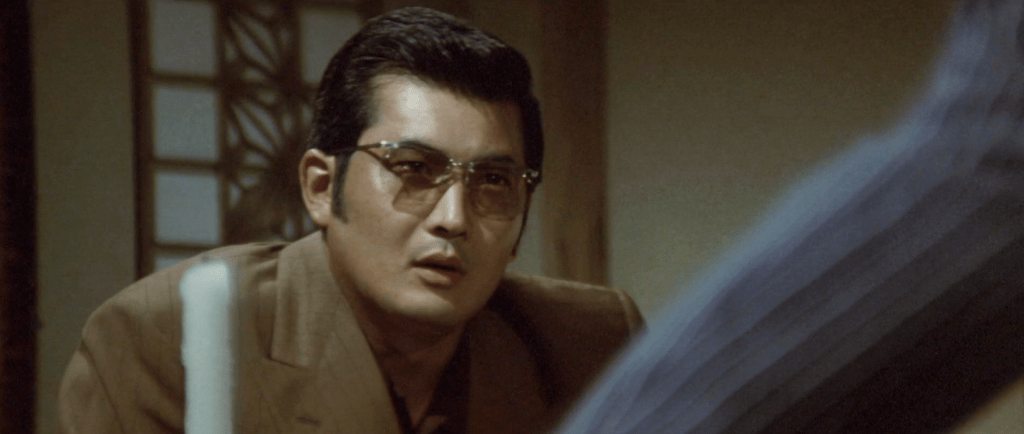
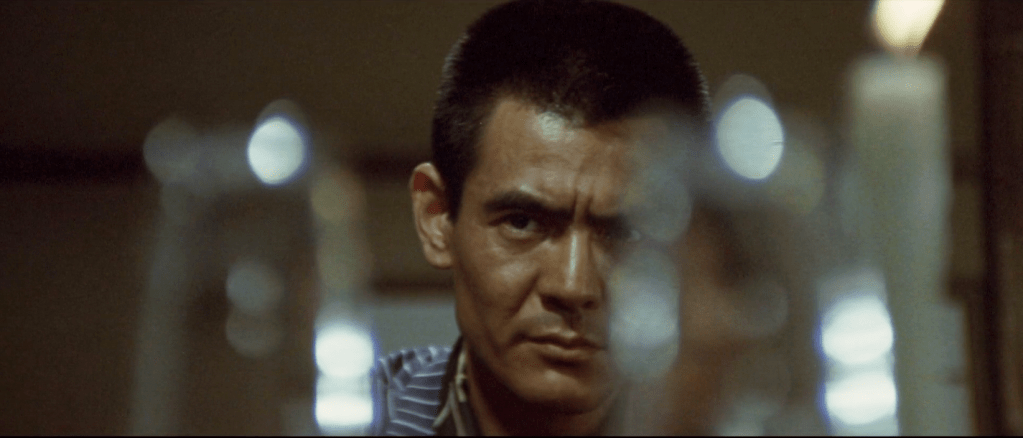
Takeda confronts Hirono again, laying bare the trap that he set up for Takeda: inviting his contact Okubo (which nobody else present could have done); bringing the Yamamori men to this trapped house; quickly agreeing to the Shinwa alliance to better put this trap into place. Hirono, guarded, cryptically states that the facts are simply up to Takeda‘s interpretation. Takeda, angry and frustrated, gets up to leave, remarking that he can never win. But Hirono stops him, confiding that his actions are not a personal slight against Takeda, but a move against Yamamori, who must be elimited for Hiroshima to stand united. Hirono explains that he aims to achieve this by dragging him into the Akashi / Shinwa conflict and eventually forcing him to retire, adding that, should Takeda succeed Yamamori, he would get his absolute support – a big vote of confidence coming from Hirono. Takeda remains silent, thoughftul.
As planned, the reconciliation between Uchimoto and Takeda, Matsunaga, Hirono, and Eda goes ahead; furthermore, to eliminate all loose threads, shifty Hayakawa is expelled from the Uchimoto family. Upon hearing the news of the unwelcome reconciliation with Uchimoto, the Shinwa family sends Itami to Yamamori himself to express their displeasure with the matter – as planned by Hirono.
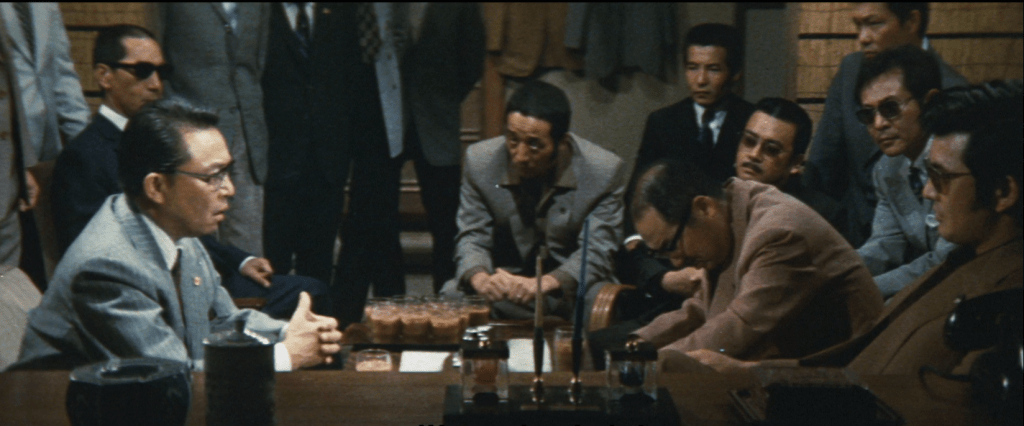
But, as usual, Yamamori has tricks up his sleeve. Bringing old contact and elder Toyoda into the mix, Yamamori negociates a deal whereupon he expels the troublemaker who led to this mess in order to start the relationship anew. And who could that troublemaker be?… None other than Hirono of course, who gets served the “resign or get resigned” choice (and paperwork) by none other than Okubo, flanked with Ueda. Hirono should have known by now that fighting Yamamori never ends well.
An angry but resigned Hirono hands over his Yamamori lapel to Takeda, calling him untrustworthy and cheap for using Okubo – to which Takeda retorts (rightly) that Hirono did the exact same not so long ago. Hirono continues on saying he was wrong to trust Takeda – who calmly retorts that this is not personal (again mirroring Hirono‘s earlier words to him), but that a family should stand united to survive – an argument that Hirono is unable to argue against.
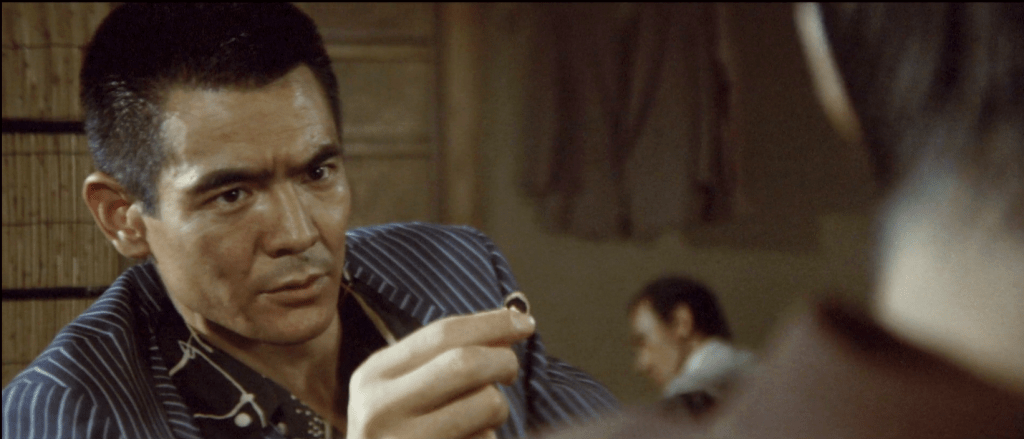
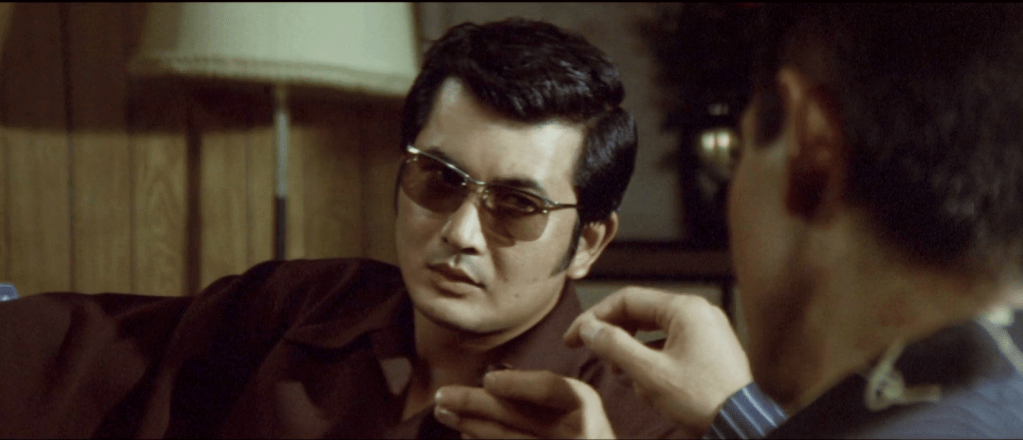
As usual, Makihara gloats at a safe distance and Eda barks pointlessly, but as Hirono storms off all eyes are on his friend Matsunaga – what does he make of this expulsion? Matsunaga responds that he is and will remain neutral, never standing against Hirono – a stance that Takeda, for obvious reasons, cannot tolerate, stating that if Matsunaga cannot stand firmly with the family, retirement is the only option.
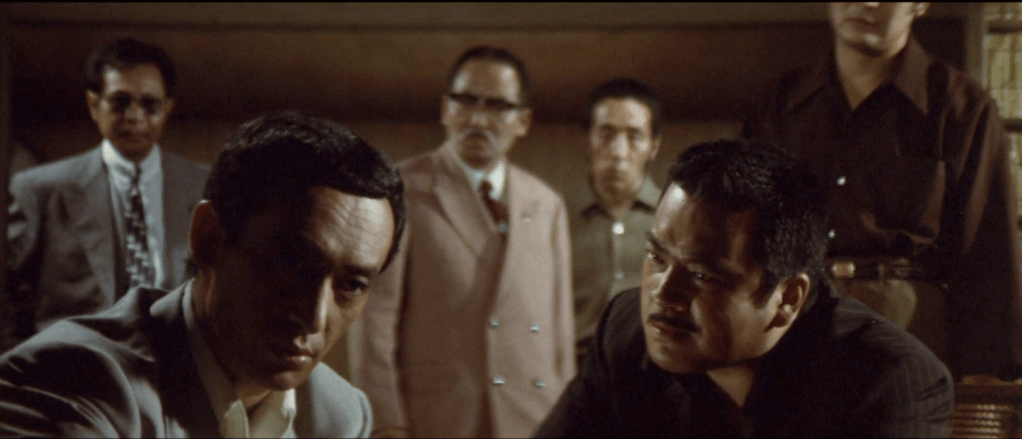
Matsunaga, without a word, gets up, bows, and… retires, never to be seen again. We’ll miss you Matsunaga!
The Hiroshima Proxy War Part 5: All Hell Breaks Loose (1963-3)
Run Time: 1:32:16 to | Key Families: YAMAMORI – HIRONO – AKASHI – UCHIMOTO (Sub-AKASHI) – UEDA – SHINWA – KOJIMA – OTHER | Reference Chart (spoilers):
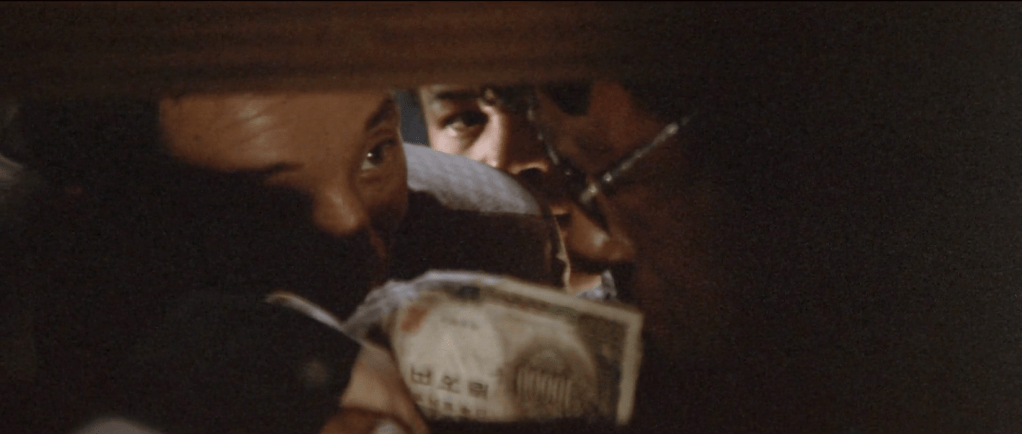
In the summer of 1963, hot on the heels of the rocky M&As, tensions are rising in Hiroshima, and everyone is preparing for war. Hirono member Katsuharu smells a rat, and, with much unecessary manhandling, asks Tomie to run with him to Tokyo. Tomie curtly responds that she’s now with Kuramoto and a scuffle ensues, interrupted by Makihara who hands Katsuharu a wad of cash “in case he needs it”. Scheming is afoot.
At the Akashi HQ, Uchimoto is being pressurised to (already! again!) break his kyōdai bonds with the Yamamori, since Hirono (a good friend of the Akashi…) was expelled because of him. At the Yamamori HQ, Takeda is paying a phonecall to Hayakawa, asking him if he wants to join forces in their fight against Hirono and Uchimoto, and as a reward formally join the family; he agrees, only to be frightened when Takeda asks him to make sure he proves his commitment.
In August, however, the commitment materialises: Hayakawa raids the Uchimoto office… in an inane attack that only causes foot soldier deaths on both sides and ends with Hayakawa running away from the police, taking the only car available and leaving everyone else stranded (and arrested). Fail.
News of the attempted raid reaches Hirono, having drinks with old ally Ueda – it’s time to crush Uchimoto! But before they leave the bar, an informant tells the group that Makihara is at a cinema near-by, ripe for an attack – a fact immediately picked-up on by Kuramoto.
Kuramoto makes up his mind, determined to make a stand for his boss and saviour. But another person overheard the conversation: Katsuharu, who promptly phones benefactor Makihara to let him know that Kuramoto is coming to kill him, before stating very loudly that he is leaving for Tokyo. Betrayed by his very family, Kuramoto gets to the cinema only to be brutally shot down by Makihara men, aware of his purpose.
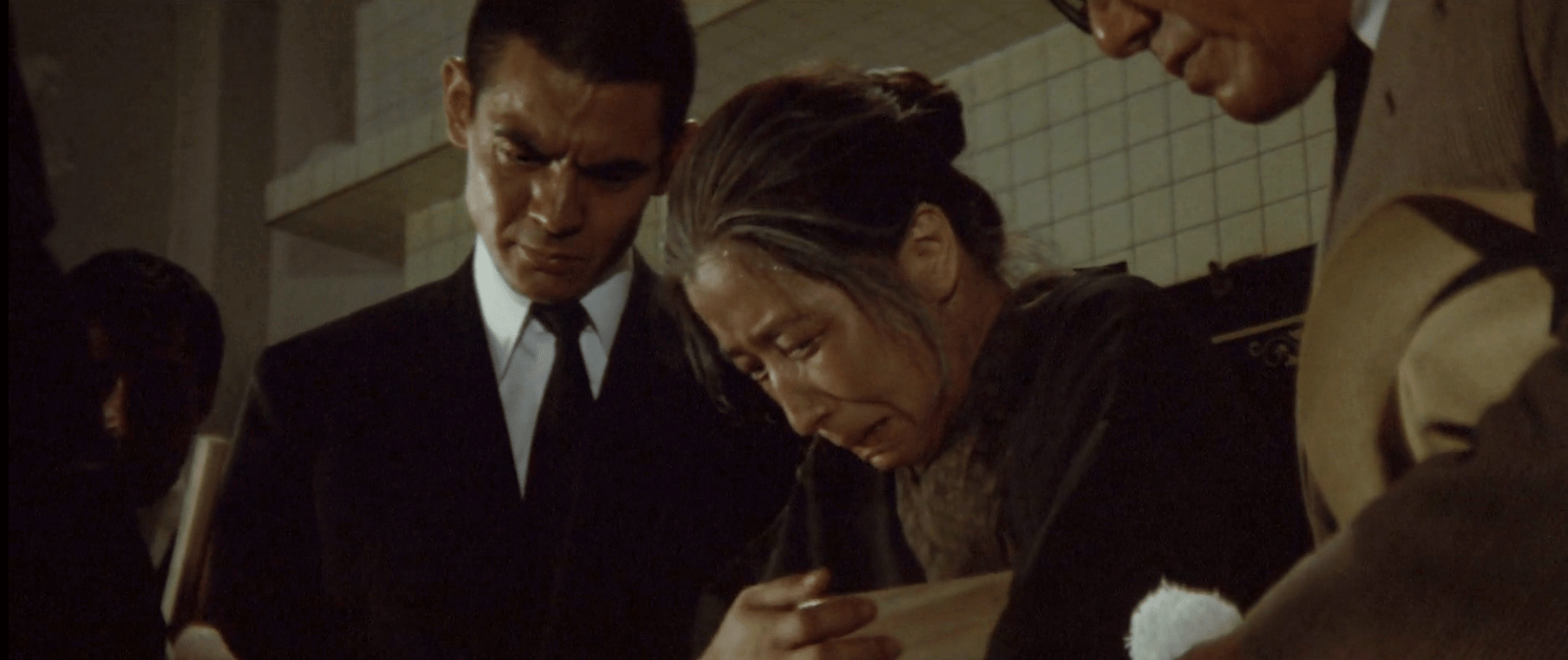
And soon, all that is left of Kuramoto is a collection of steaming bone shards, picked up by Hirono and Kuramoto‘s mother at the cremation, slowly and respectfully placed into an urn. Where are his insides? asks the mother, desperate, wailing at the loss of her son… And Hirono looks on, distraught and shocked by the scene he is witnessing. For indeed this is how underlings end up: dead, disembodied and broken up, crushed by the wars waged by their bosses, mere young bones passed on to a crying parent at a sad funeral.
As Hirono escorts the mother to her car, gunshots are heard: power struggles stop for no occasion, least of all an underling’s funeral. Hirono, shot at but unharmed, drops the precious box containing the bones, as a car drives away… crushing the box and the bone shards in the process. Hirono can give chase, or collect the remains – and he chooses the latter, picking up the steaming, crushed bones of the young apprentice and crushing them painfully into his hand, amongst the renewed wails of the sorrowful mother.
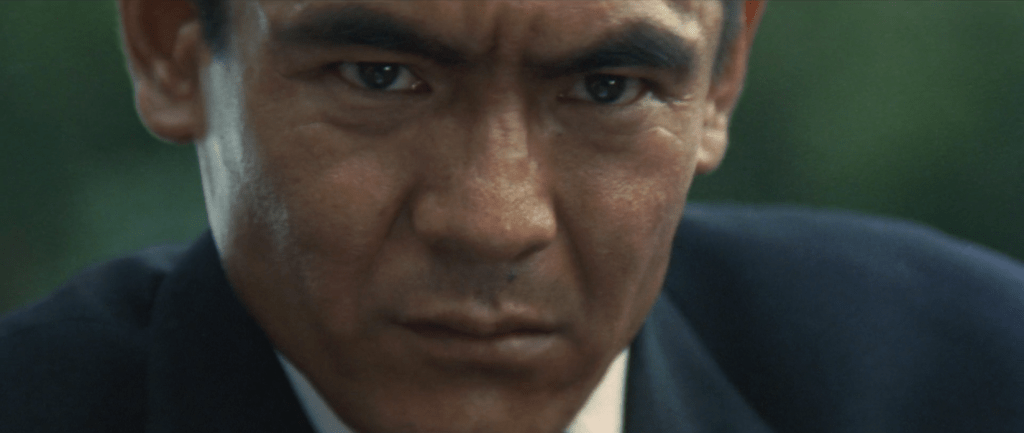
“When a battle starts, the young ones are the first victims – never to be honored“. As the Hiroshima dome flashes in the background, the words resonate through Hirono – a painful lesson never to be forgotten.
-THE END-
Discover more from Gamblers & Drifters
Subscribe to get the latest posts sent to your email.
 Gamblers & Drifters
2 thoughts on “Plot Deep Dive: Battles Without Honor and Humanity [3] – Proxy War (1973) Part 2”