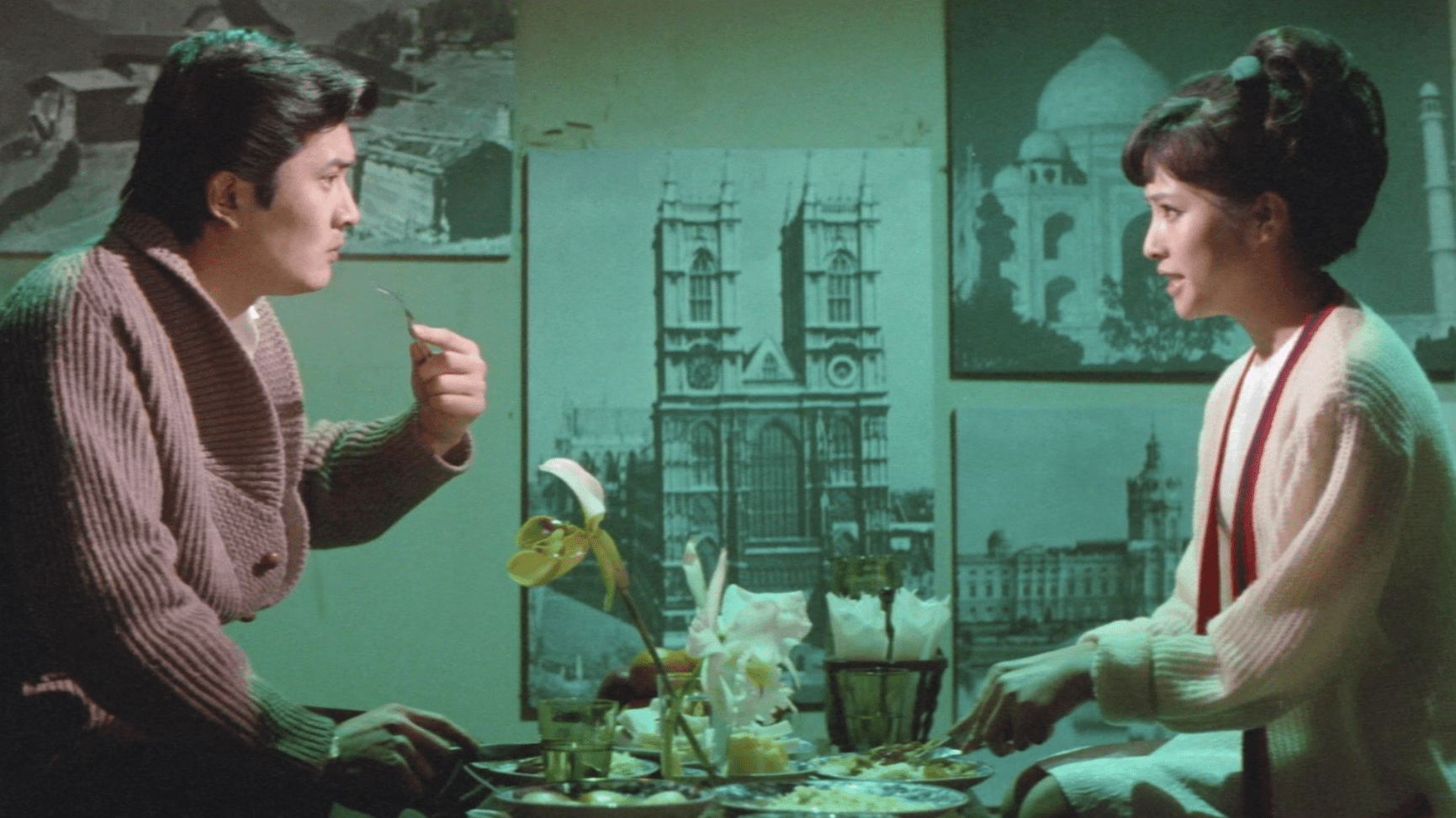
“Should we give you a free shave? Or maybe just slice your throat?”
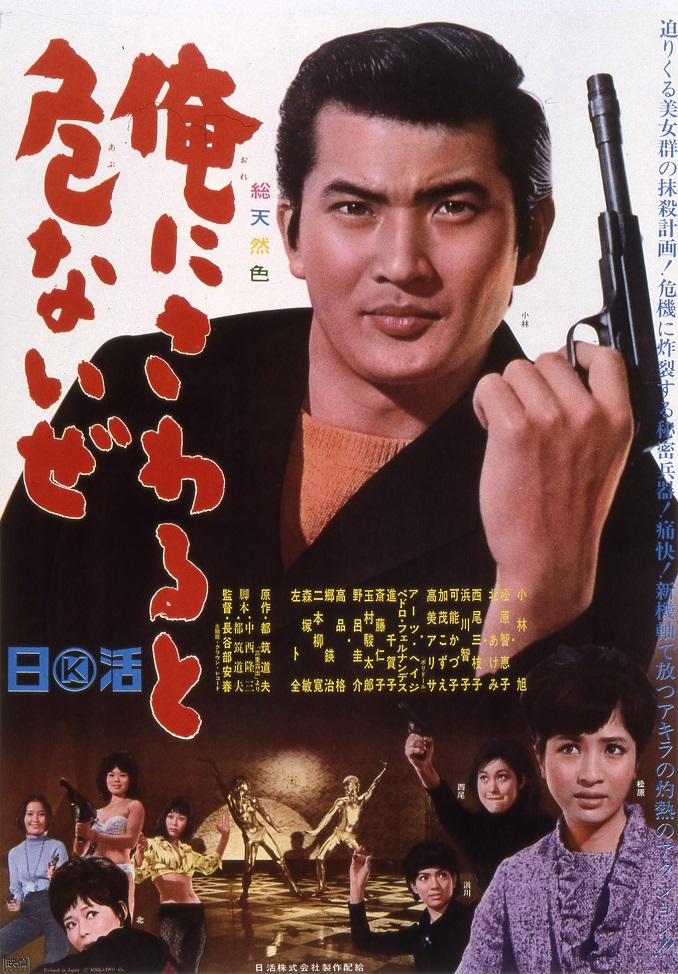
- Original Title: 俺にさわると危ないぜ
- Directed by: Hasebe Yasuharu
- Featuring: Kobayashi Akira, Matsubara Chieko, Kita Akemi & more
- Studio: Nikkatsu
- Extras: Plot Deep Dive
REVIEW
Stolen gold, ninja gangs, portable canons, and all out action: a look at Nikkatsu’s colourful take on Bond. Arrivederci, Leoparda Carina!
From Spy Novel to Nikkatsu Spy
At the peak of the 1960s spy craze, Nikkatsu was looking for material for its next action-hit when it hit the jackpot: ‘Triple Exposure’1, a 1964 spy thriller novel by Tsuzuki Michio featuring an usual plot, a charismatic protagonist, and plenty of international elements – the perfect mix for a Nikkatsu Borderless Action film. Hasebe Yasuharu, freshly promoted to director2, jumped on the opportunity to direct his first film – in style.
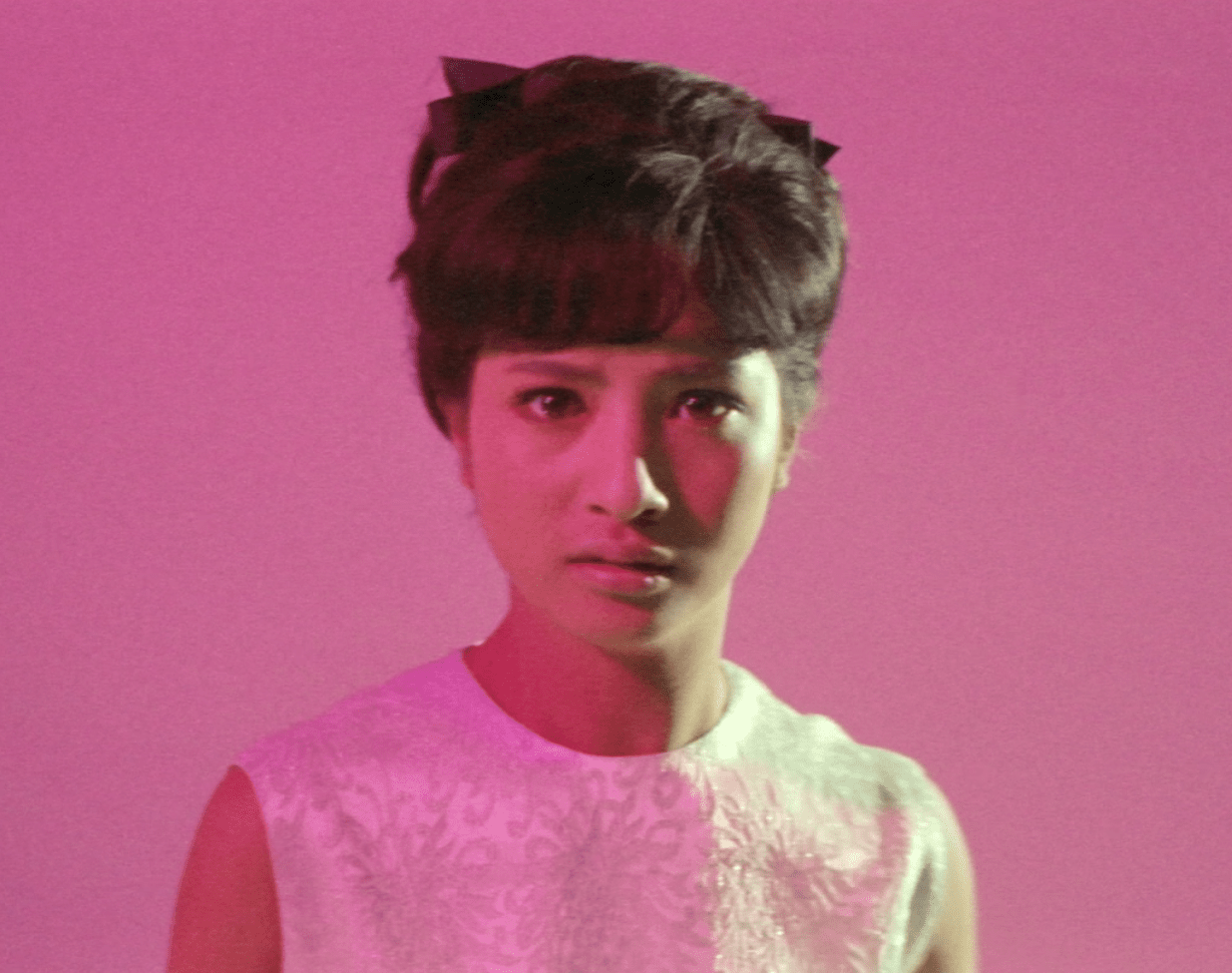
The reworked story introduces us to Hondo Daisuke (Kobayashi Akira), an English-speaking, devil-may-care war photographer who falls for stewardess Sawanouchi Yoriko (Matsubara Chieko) on a plane back to Japan. Their first date is cut short when Yoriko is stalked by suspicious foreign men, and later kidnapped by a murderous ninja group dubbed ‘The Black Tight Killers’. Who are these factions who want Yoriko so badly, and why?
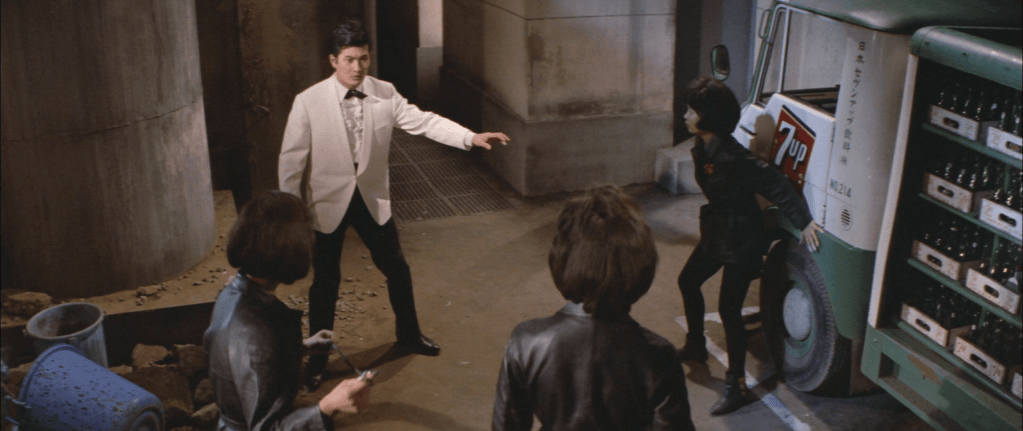
The resulting game of cat and mouse sees Hondo untangling the mystery behind Yoriko’s kidnapping: a stash of stolen WWII Okinawan gold wanted by both factions – whatever the cost. To save Yoriko, Hondo must face both groups and survive deadly car chases, kidnappings, vinyl record throws, golden sweatboxes, and some very special ninja moves. But Hondo soon realises that friends and enemies are not who they seem, and alliances start to shift towards a dramatic resolution…
Bond, Borderless Style
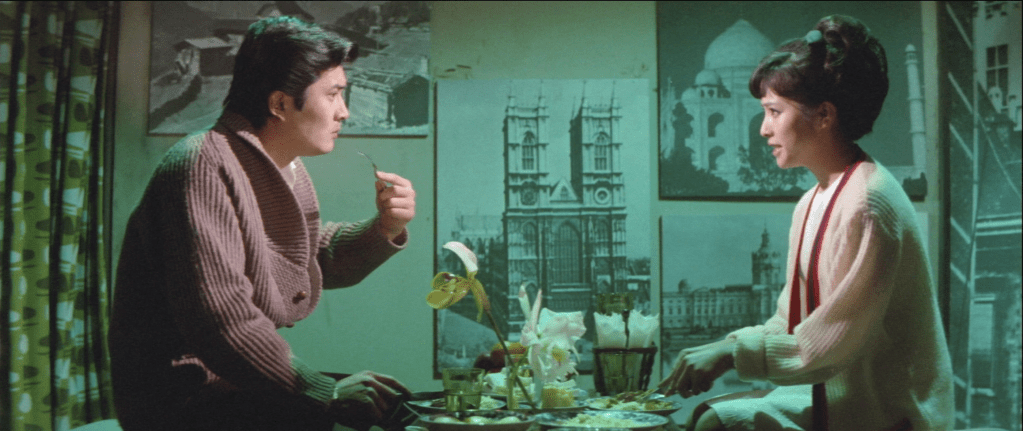
In Black Tight Killers, the Nikkatsu Borderless touch is clear: this is the sleek and modern Japan where protagonists sing in Italian (Arrivederci, Leoparda Carina – Goodbye, Pretty Leopardess), speak English, cook French food next to a picture of Westminster Abbey, and travel around the world on exciting assignments. They help equally hip globetrotting stewardesses, and butt heads with principled ninja girl gangs who make quick work of their opponents (Hondo included) using pop weapons such as vinyl records, bubblegum, and explosive golf bombs. All the while, traditional Japan is never too far behind in spirit or in architecture, and the spectre of WWII casts an unexpected shadow on the latter half of the plot.
This overall breeziness is the perfect backdrop for Black Tight Killers’ key inspiration – James Bond. From Hondo’s comically similar name3 (in Japanese, Bond = ボンド / Bondo), to gadget-giving mentor Momochi (the ninja M), to the gold-painted dancers taken straight from Goldfinger (1964), and to its spectacular action scenes (nothing like shooting helicopters with portable canons), the film makes no secret of its fondness for the zaniest Bond hallmarks.
Like Bond, Hondo is a man who is at once extremely capable and yet incredibly careless, often relying on gadgets, cicrumstances, or women to save him from lethal situations. The Japanese title ‘俺にさわると危ないぜ’ (Ore ni Sawaru Abunaize)/ ‘If You Touch Me, Danger’ is a dark joke slowly revealed to the viewer: all the women under Hondo’s care are put in extreme danger, including Yoriko who is kidnapped 4 times (!) from right under his nose. To make things worse, part-time womaniser Hondo is incapable of calling any of the women by their own name, using a blanket ‘君’ (kimi) / ‘You’ across the board. If you think this deserves a comeuppance, don’t worry: Yoriko takes care of it at the end of the film, in an ending that Bond films should definitely take inspiration from.
The Dream Team Behind Black Tight Killers
To bring the colourful world of Black Tight Killers to life, Hasebe draws inspiration from a number of mentors and colleagues. His apprenticeship under Suzuki Seijun resurfaces in the film’s explosion of theatrics and colours: vivid dream sequences and neon-drenched urban scenes are contrasted with strikingly composed black and white sets, sat somewhere between Antonioni and a Courrèges interior. As well as Suzuki, Hasebe also cites satire master Okamoto Kihachi as inspiration for the irreverent humour and particular sense of rhythm that give Black Tight Killers its unique flavour.4
Meanwhile, Hasebe’s team brings the substance to the style: production designer Satani Akiyoshi’s eye for detail is evidenced in Hondo’s apartment (part photography studio, part French café, cognac adverts and snack picks included) or in the Black Tight Killers’ meticulously coordinated outfits (each character colour-coordinated from clothes to props, echoing Suzuki’s Gate of Flesh (1964)). On the sound stage, returning contributor Yamamoto Naozumi brings emotion to dramatic scenes with his recurring composition ‘Bad Girl Bites the Dust’5.
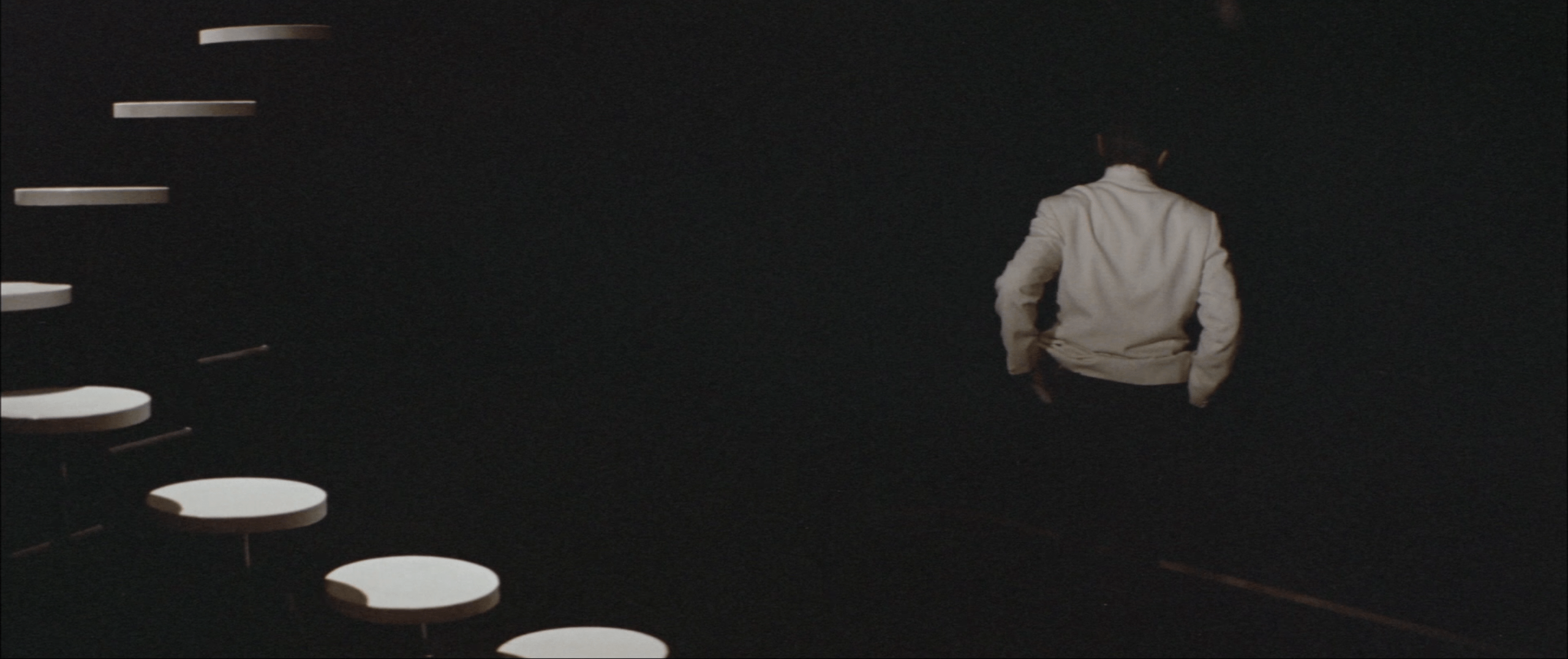
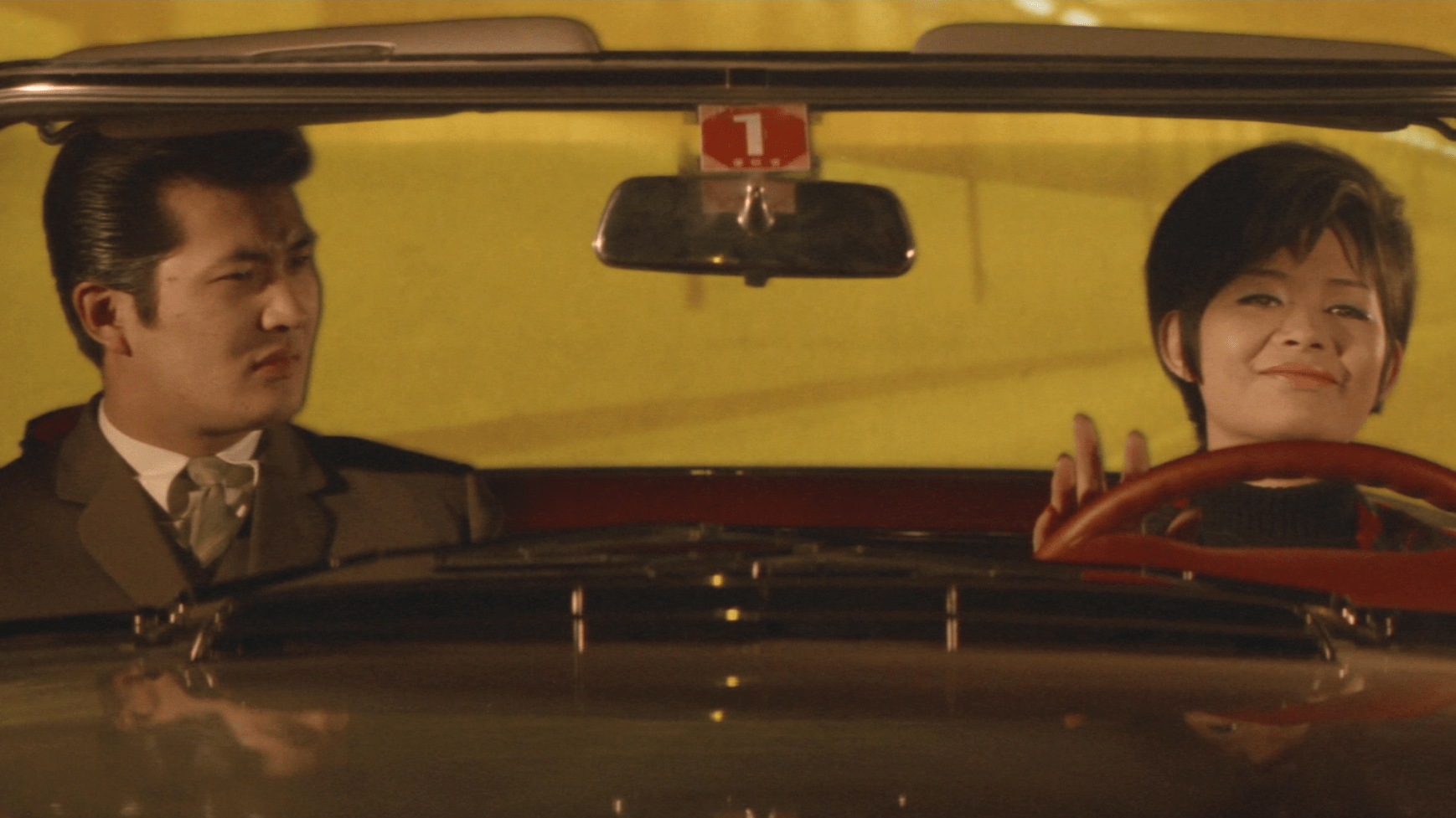
The cast also sees its share of returning contributors such as Kobayashi Akira, the Nikkatsu star who previously promised Hasebe to act in his first film as director6. The promise is fulfilled with gusto, with Kobayashi bouncing from stunt to stunt and throwing himself at any bad guy or piece of furniture that dares look at him wrong. Kobayashi once again puts his comedic skills to great use, delivering straight-faced one-liners and icy stares in situations so ridiculous that even Sean Connery might have blushed. Elsewhere, Black Tight Killers allows Matsubara Chieko a late but memorable twist to her damsel-in-distress persona, while the Black Tight Killers themselves, led by the charismatic Kita Akemi, deliver fun and sometimes touching performances. Baby-faced bad guy Gō Eiji also gives an excellent cartoon villain performance as Sabu, supported by various Nikkatsu regulars.
In Conclusion
Author Tsuzuki said of his novels that he wanted to ‘write a good novel, even if it was light’7. Much of this spirit has been channeled into Hasebe & co’s adaptation, a joyful mix of stunning visuals, theatrical sets and plot twists, and deceptively ingenious details and performances. A feast for the eyes and a treat for any Bond or Nikkatsu fan, Black Tight Killers is a coulourful gem not to be missed!
BEST OF
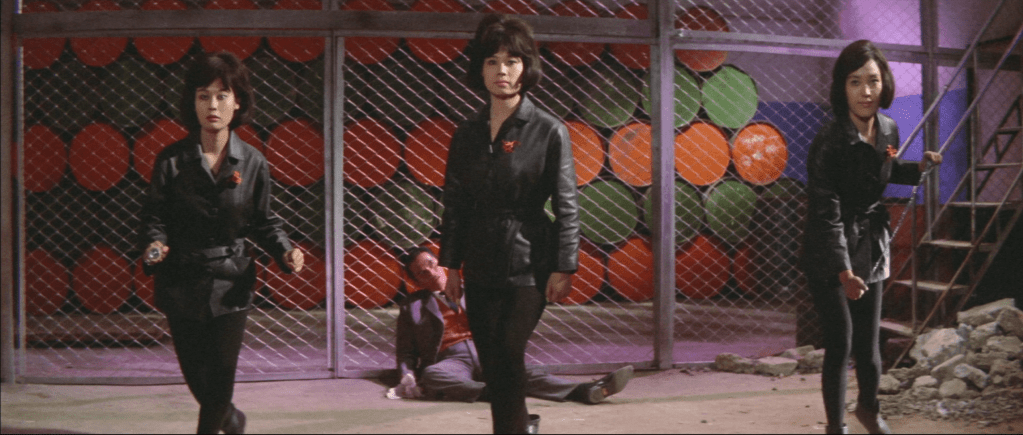
MEET THE BLACK TIGHT KILLERS
Cool, calm, collected, and deadly – from their sinister introduction to their very last fight, the Black Tight Killers show that they’re not to be trifled with. If only they could be bullet-proof like Hondo!
OCTOPUS POT
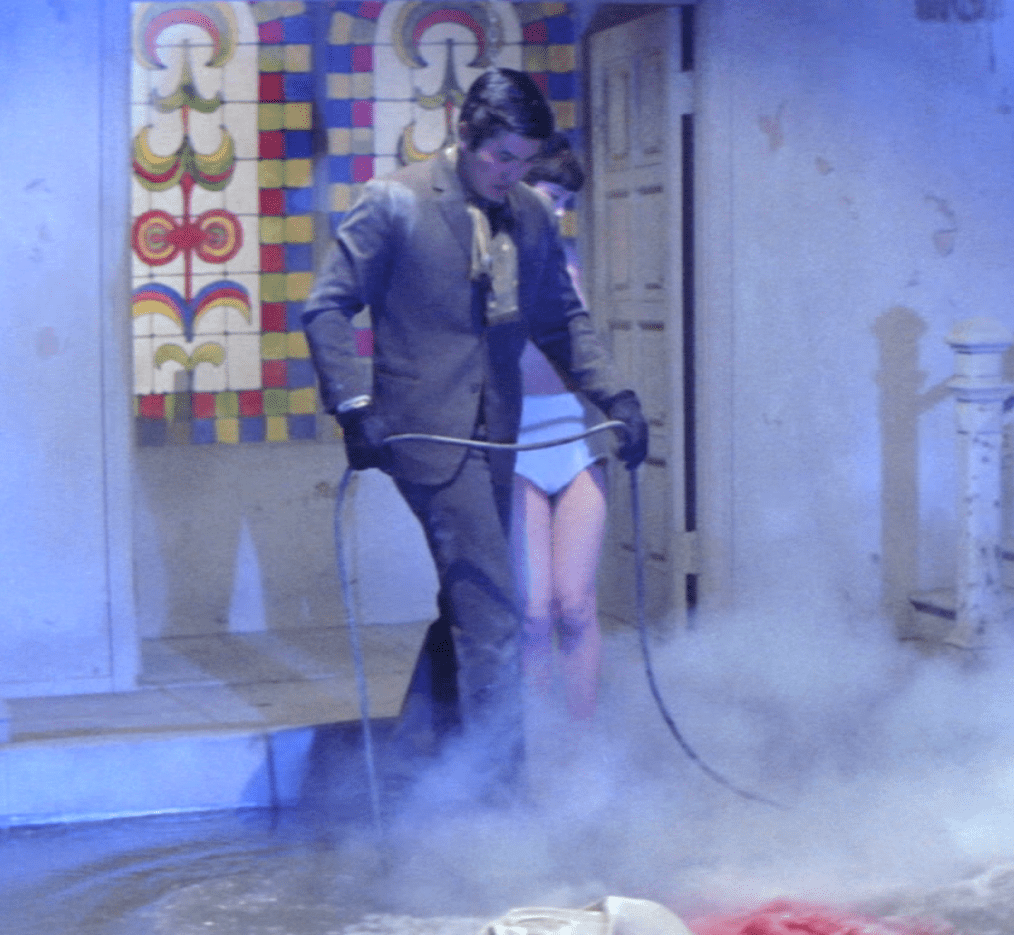
Hondo gets (very easily) seduced by Black Tight Killer Akiko, and the romantic evening ends with a ninja move he was really, really not expecting.
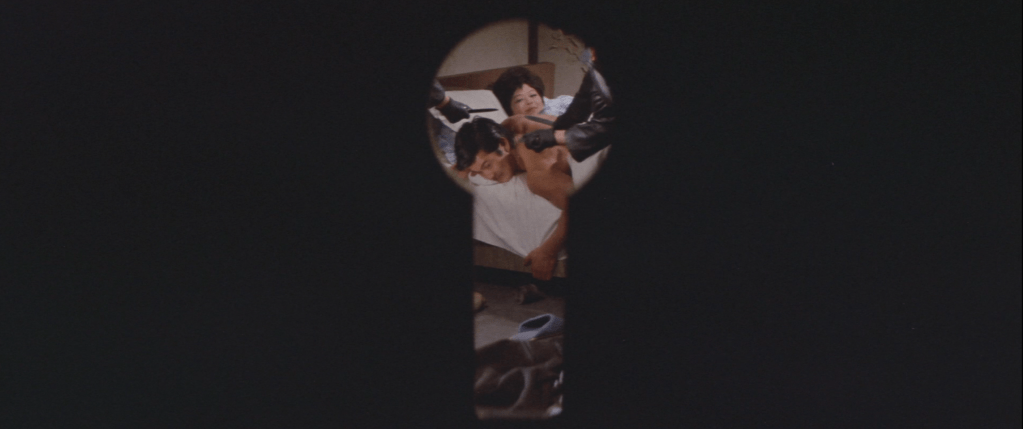
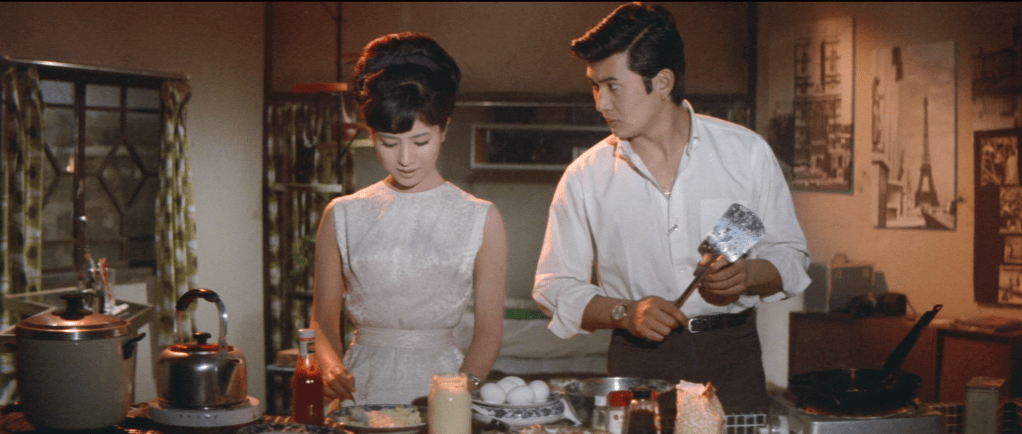
CHEZ HONDO
Hondo finally recunites with Yoriko and the two catch-up over a wonderful dinner-making sequence. Who knew that Ninja bedrooms were decked out like small French cafés!
KOBAYASHI AKIRA GIVES 200%
Throughout the film, action hero Kobayashi Akira gives his all to play Hondo: gravity-defying stunts, animated fights, flame-throwing, furniture demolition, impossible facial expressions… The Mighty Guy at work!
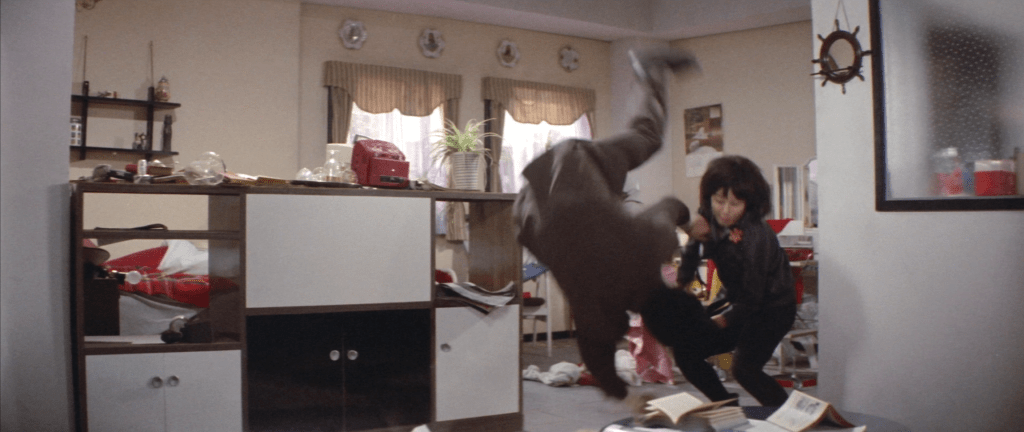
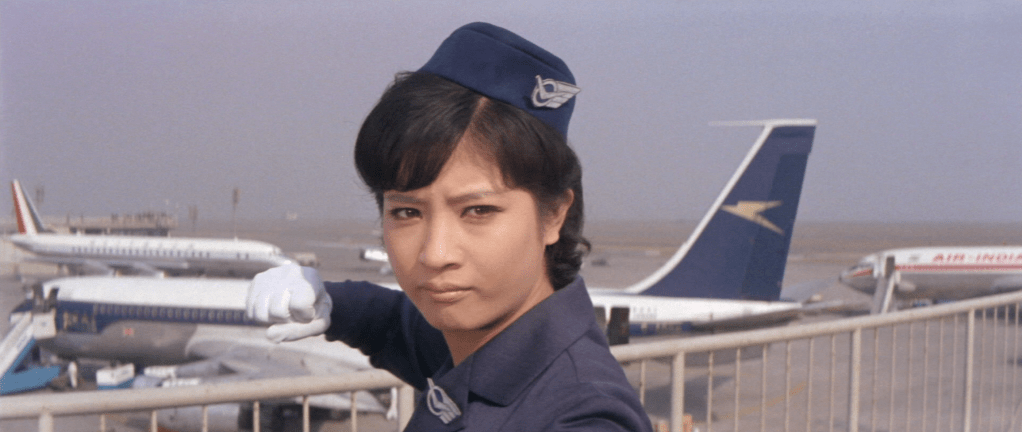
HE HAD IT COMING
Bad chat-up lines, cheating boyfriends, four kidnappings in a row, a fake uncle, evil gangsters who want to paint her white – Yoriko has had enough of men behaving badly, and makes it obvious to Hondo in a delightfully punchy ending.
Notes and References
- Wetherall W. 2006, S.B. Cranston in Japan, Yosha Bunko, accessed 2nd December 2023, http://www.yoshabunko.com/literature/Tsuzuki_1964_sanju_roshutsu.html ↩︎
- Hasebe, Yasuharu. Interview. Conducted by Chris D. for “Outlaw Masters of Japanese Film”, I.B. Taurus, 2005. pp. 131-132. ↩︎
- This naming in-joke can also be found in many Eurospy films. ↩︎
- Hasebe, Yasuharu. Interview. Conducted by Chris D. for “Outlaw Masters of Japanese Film”, I.B. Taurus, 2005. pp. 131-132. ↩︎
- Hasebe, Yasuharu. Interview. Conducted by Chris D. for “Outlaw Masters of Japanese Film”, I.B. Taurus, 2005. pp. 131-132. ↩︎
- Hasebe, Yasuharu. Interview. Conducted by Chris D. for “Outlaw Masters of Japanese Film”, I.B. Taurus, 2005. pp. 131-132. ↩︎
- Michio Tsuzuki, Wikipedia Japan, accessed 2nd December 2023, https://ja.wikipedia.org/wiki/%E9%83%BD%E7%AD%91%E9%81%93%E5%A4%AB ↩︎
Discover more from Gamblers & Drifters
Subscribe to get the latest posts sent to your email.


One thought on “Review: Black Tight Killers (1966)”